
Henry Clay history: fascinating from Cuba in 1850 to the return in the 1980s


Henry Clay history: A brand that was once one of the biggest names, whose roots lie in Cuba around 1850 - and which has made the leap to the present day, albeit without Cuba. It is precisely this path that makes it so interesting: success, factories, changes of ownership, international corporations and, in the end, a comeback under completely different circumstances.
Where do cigars come from?
Table of contents

The logo of the Henry Clay brand when it was owned by Julian Álvarez. (Source: Adriano Martinez Rius: “The Great Habano Factories”, Barcelona 2005, ISBN: 84-609-4024-1)
Who was Henry Clay?
Henry Clay was „only“ the namesake of the brand: an American politician (member of the House of Representatives, Senator and Secretary of State). He lived from 1777 to 1852. A lawyer by profession, he quickly gained a reputation as a brilliant orator and mediator - two skills that are irreplaceable in politics. His contemporaries held him in high esteem; at the time, he was considered one of the most powerful men in the world. Incidentally, he still holds a record today: he contested the US presidential election three times, but the opposing candidate won three times.

He gave the brand its name: Henry Clay, American politician and extremely important in his time. (Source: Wikipedia)
How a US politician became a Cuban cigar brand
But what connects one of the most important American politicians of his time with an originally Cuban cigar brand? In the Henry Clay history the trail leads to Juan Antonio Bances. Through an intermediary, he asked Henry Clay, who was known worldwide at the time, if he could name a cigar brand after him. Henry Clay agreed - and it was worth it. Many people still know the name Henry Clay today.
And that is precisely why the Henry Clay history until today: it begins with a world-famous name, but is characterised by Cuban entrepreneurs, factory addresses and later by international companies.

A Vista of the Henry Clay brand from the period after 1883 (Source: Adriano Martinez Rius: “The Great Habano Factories”, Barcelona 2005, ISBN: 84-609-4024-1)
Two founders, two roles: Bances and Álvarez Granda
At Bances' side was Julián Álvarez Granda. Both remain important figures in Cuban cigar history to this day. These two men were driven by the highest quality, a passion for tobacco and financial acumen.
But let's start at the beginning of the Henry Clay historyAround 1850, Juan Antonio Bances and Julian Álvarez Granda opened a cigar factory and named the cigar brand Henry Clay.
As they said themselves, they were concerned with the cultivation, acquisition, manufacture and sale of tobacco. Branded cigars were to be exported to countries on different continents. They also wanted to create opportunities to set up new factories, workshops and warehouses.

A factory where Henry Clay brand cigars were made (3/3): A historical drawing of the factory on Calzada de Luyano No.100. The drawing is not quite correct, the round gable with the inscription was further to the right. (Source: Gustav Bock: “The Truth about Havana Cigars”, New York 1904)
Julian Álvarez Granda
Julian Álvarez Granda can be described as a tobacco specialist. He originally came from Asturias. He was the perfect man for the operational business.

Julian Álvarez Granda: Together with Juan Antonio Bances, he founded the Henry Clay brand (Source: Adriano Martinez Rius: “The Great Habano Factories”, Barcelona 2005, ISBN: 84-609-4024-1)
Juan Antonio Bances
Juan Antonio Bances was a banker and financier, the first managing director of the companies of the Spanish government. He was responsible for purchasing tobacco for the cigar factory in Seville. Thanks to his connections, he became the first financier in the Cuban cigar world: whether someone needed a loan for a factory, brand or plantation, they turned to him.
Bances is also the one who is essentially associated with the Partagás brand: After the death of Jaime Partagás in 1869, his son José initially took over the business. Bances later became the owner of the Partagás brand in the 1880s.

Juan Antonio Bances: banker, financier, firmly rooted in the tobacco business, was the co-founder of the Henry Clay brand around 1850 and later, around 1880, owner of the Partagás brand. (Source: Amir Saarony and contributors: “Partagás - The Book”, ISBN: 978 0 9879290 1 3)
The first addresses of the brand
Back to the Henry Clay brand: The first factory was located at Calle Aguacate No. 98, and there was a second factory at Calle San Nicolas No. 128, producing cigars under the Henry Clay and Flor de Henry Clay brands (founded around 1859).
Who the Henry Clay history really wants to grasp, needs precisely such details: streets, house numbers, second locations - not as decoration, but as coordinates of a brand that was built in Havana in real life.

A factory where Henry Clay brand cigars were made (1/3): the first Henry Clay brand cigars were made in one of these houses on Calle Aguacate No. 98 from 1850.
1875 to 1883: Sale, new building, „La Loma“
In 1875, Bances sold all his shares to Julián Álvarez. Then, in 1883, a completely new factory was completed: the „Henry Clay“ factory at Calzada de Luyano No. 100.
It is a large, impressive building. The workers called the factory La Loma. Loma is the Spanish word for hill; and indeed, the building is located at the highest point of the Calzada de Luyano, right on the hill. Today, cigarillos are produced in this building on behalf of Brascuba.

A factory where Henry Clay brand cigars were made (3/3): Here is a historical photo of the factory on Calzada de Luyano No. 100 (Source: Gustav Bock: “The Truth about Havana Cigars”, New York 1904)
A market on the move: Struggle for independence and change of ownership
The situation in Cuba was very tense before and around the turn of the century. The struggle for independence, which was also bloody, caused many people, including factory owners, to leave the country. As a result, there was a lot of movement on the market, with factories and brands up for sale.
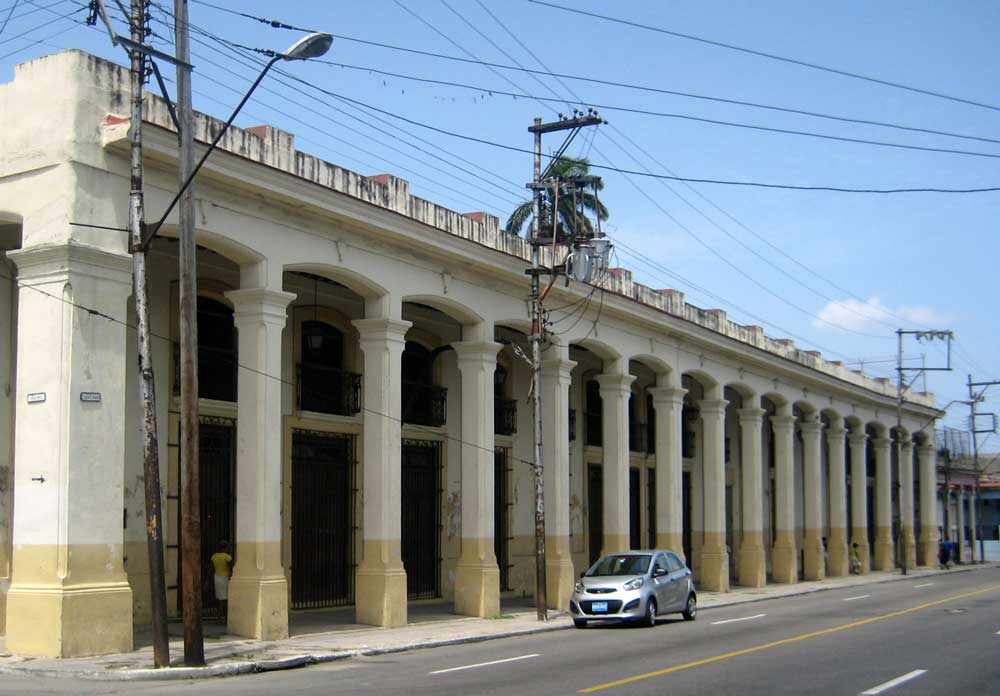
A factory where Henry Clay brand cigars were made (3/3): The factory on the Calzada de Luyano No.100.
1887: Gustav Bock and „Henry Clay and Bock Ltd.“
The collaboration with the German Gustav Bock then began in 1887. Julián Álvarez Granda and Gustav Bock founded „Henry Clay and Bock Ltd.“ Gustav Bock took it upon himself to buy up further brands with the help of British capital.
This development continued. In 1889, „Alvarez Lopez y Cia.“, owner of La Corona, sold shares to „Henry Clay and Bock Ltd.“ This marked the beginning of the collaboration between Gustav Bock and Segundo Alvarez, an equally experienced man in the tobacco business, in the operative business.

Gustav Bock: He was one of the personalities in Cuban cigar history who played a decisive role in shaping it. (Source: Enzo A. Infante: “Havana Cigars 1817-1960”, Neptune City 1997)
1898 to 1902: British company, then American Tobacco
Henry Clay and Bock Ltd.„ was then sold to the British “Havana Cigar and Tobacco Company„ in 1898. Later, in 1899, this company transferred all its shares to the “American Tobacco Co.„
During this time, the operational management of the brands and factories was still in the hands of „Henry Clay and Bock Ltd.“ It was not until 1902 that the „American Tobacco Co.“ also took over the operational management with the founding of its own branch in Havana, the „Havana Commercial Co.“

Segundo Álvarez: Hardly anyone knew Havana's cigar landscape so well. (Source: Enzo A. Infante: “Havana Cigars 1817-1960”, Neptune City 1997)
1904: Production in the „Iron Palace“ and unanswered questions
From 1904, many cigar brands were manufactured in the newly built iron palace on Calle Agramonte No. 10. It is not known how long La Loma, the factory on the Calzada de Luyano, was in operation.
Both Segundo Alvarez and Gustav Bock were already long-serving gentlemen at this time. Gustav Bock died in 1910, and Segundo Alvarez still ran a small manufactory on Calle Lealtad No. 10 with the Lord Beaconsfield brand, but also died at the beginning of the century.

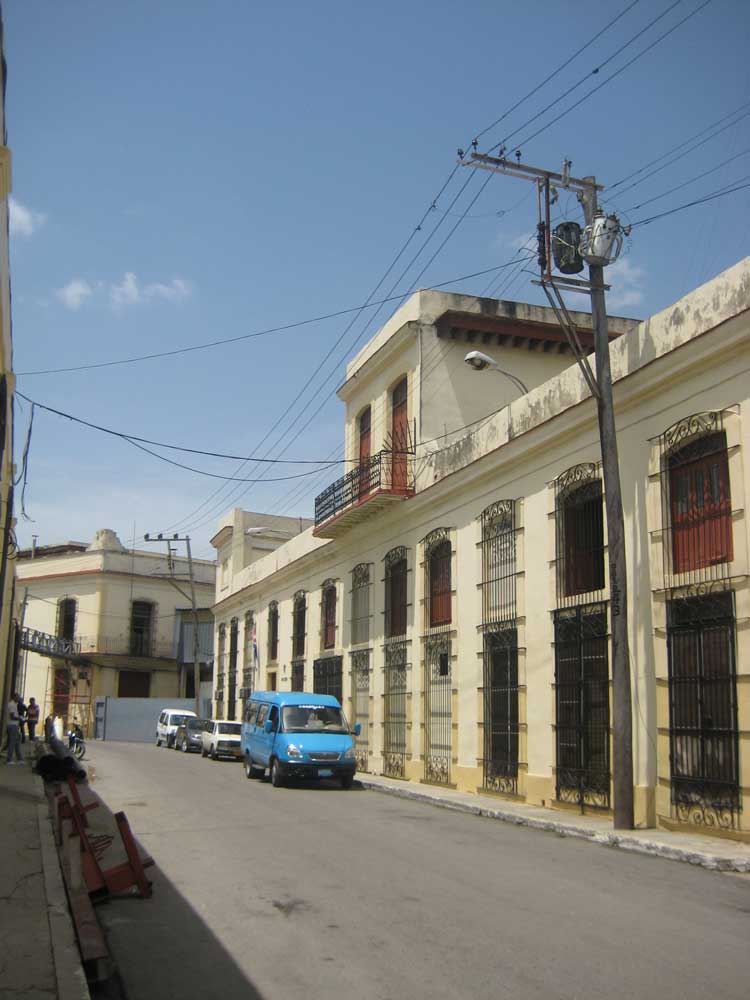
A factory where Henry Clay brand cigars were produced (3/3): This grid shows the year in which the factory on Calzada de Luyano No. 100 was built: 1883.
Revolution, silence, comeback: the late Henry Clay story
The revolution triumphed in Cuba in 1959. After that, the Henry Clay brand fell silent. Cigars of this brand were no longer officially produced in Cuba.
In the 1980s, the name Henry Clay returned as a brand, then owned by «Consolidated Cigars». Under the management of „Altadis Consolidated Cigars”, the brand was rebuilt with various lines. Today, the cigars are made in the Tabacalera factories, but not with Cuban tobacco.
This ends the Henry Clay history but changes the frame: The name remains, the origin is different.

A factory where Henry Clay brand cigars were produced (3/3): A doorpost inside the factory on Calzada de Luyano No.100 bears the name of the brand: Henry Clay.
Here you will find the Henry Clay Manufaktur
If the live folder does not work, please click here for Henry Clay Manufaktur.
Picture credits
- Claudia Puszkar
- The image sources are named with the photos
Curated for you
External website: Experience the Habanos Club in Germany
At Origin Of Cigar: THE PLEASURE LETTER by Origin Of Cigar: A curated email celebrating the fine pleasures of Cuban cigar culture.
Historical Habanos manufactories documentary film
In this film, their stories - and their true faces - are uncompromisingly revealed. This is far more than just a documentary film - it is a journey into the soul of Cuba.

What is in your drawers?
Some chapters in the history of cigars still lie in hidden in drawers, archives or private collections. Do you own Records, documents or references to Cuban cigar brands? Or do you know Sources, that could help with historical research? Then please send us an e-mail. Claudia Puszkar will contact you personally and discuss everything else with you. Together we can Bringing buried stories back to light. 👉 admin@origin-of-cigar.com
New to Cuban cigars? Or deep into it?
FAQ - Read the frequently asked questions
Open the glossary of Cuban cigars
Who is behind Origin Of Cigar?
Who we are and how you can reach us → Please click here
Henry Clay Photo Gallery
If you do not see the photo gallery, please click here for the Henry Clay photo gallery




References
- Min Ron Nee:
- “AN ILLUSTRATED ENCYCLOPAEDIA OF POST-REVOLUTION HAVANA CIGARS” / Hong Kong 2003, ISBN: 978-3980930826
- Instituto de Investigaciones del Tabaco Cuba:
- „The world of Habanos“ / Havana 2013, ISBN: 978-959-7212-08-9
- Adriano Martínez Rius:
- “Habano the King” / Barcelona 1998, ISBN: 84-930387-1-7
- Adriano Martinez Rius:
- “The Great Habano Factories” / Barcelona 2005, ISBN: 84-609-4024-1
- Orlando Quiroga:
- “El Habano al rojo vivo” / Havana 2002
- Enzo A. Infante:
- “Havana Cigars 1817-1960” / Neptune City 1997
- Eumelio Espino:
- “El Habano - De la semilla al puro en 539 pasos” / Madrid 2019, ISBN: 978-84-09-07091-6
- Alexander Groom:
- “El Habano Moderno” / Helios House Press 2022, ISBN: 978-911683-05-6
You are here:


 Deutsch
  Español
  English (UK)
  Français
  Italiano