
Cabañas Cigars: The fascinating history of the oldest Habanos brand


Cabañas cigars are considered the oldest known Habanos brand and are among the pioneers of Cuban cigar history.
Where do cigars come from?
Table of contents

This logo was also used for the relaunch of the Cabañas brand in 1989. However, production was finally ceased in 2005. (Source: Min Ron Nee: “AN ILLUSTRATED ENCYCLOPAEDIA OF POST-REVOLUTION HAVANA CIGARS”; Hong Kong 2003, ISBN: 978-3980930826)
Cabañas cigars hold a special place in Habanos history. The brand is considered the oldest known Habanos brand still in existence and is regarded as the first cigar brand to be officially registered in Havana. Its founder, Francisco Álvarez Cabañas, is among the significant pioneers of the Cuban cigar industry.
The Cabañas name once enjoyed high prestige in Havana. Today the brand no longer exists, yet its history belongs to the most important chapters in the development of Cuban cigars.
What are cabasCigars?
Cabañas cigars were a traditional Cuban cigar brand, officially registered as early as 1810. It is considered the oldest known Habanos brand and was founded by Don Francisco Álvarez Cabañas. The factory was located at 112 José Maria Street in the Old Havana district of Havana.

The first Cabañas brand manufactory was located from around 1790 at Calle Jesús María No.112, a small street in the southern part of Old Havana.
Warum sind CabaWhat makes cigars special?
The brand was created at a time when cigar production in Cuba was officially still forbidden. Francisco Cabañas began producing cigars in Old Havana as early as around 1797, although the Spanish tobacco monopoly strictly controlled tobacco processing. All tobacco at that time was intended for export to Spain for the production of snuff.
How Francisco Cabañas managed to produce cigars and consequently avoid punishment remains unclear to this day. He presumably had excellent relations with the Spanish colonial government. In addition, there were various, albeit very small, chinchales (factories) where small quantities of cigars were produced for the local clientele. Only a few cigars were smuggled abroad.
The logo of the Cabañas brand. Cabañas is one of the oldest Havana brands that unfortunately did not survive.
Classification within the world of Habanos
When the Spanish tobacco monopoly was abolished in 1817, Francisco Cabañas already possessed many years of experience in cigar manufacturing. This allowed Cabañas to quickly establish itself as one of the most successful and respected brands.
Cabañas cigars were reportedly available in Great Britain as early as 1833. They were particularly popular in London and significantly contributed to the brand's international reputation.
Facts about Cabaña's cigars
* Introduction: officially registered 1810
* Unique feature: oldest known Habanos brand
Concept: Hand-rolled Cuban cigars, over 100 years old and family-owned
Production: always in Havana, at various sites of the Cuban cigar industry
Is CabaWhat ifThe latest Habanos brand?
The designation as the oldest Habanos brand is frequently used, but it cannot be definitively proven. Although Cabañas was registered/mentioned as early as 1810, it is likely that another cigar brand existed under the name/ownership of Bernardino Rencurell prior to this.
As there was no official trademark registration at the time (because cigar production officially did not exist or was even forbidden), these early brands cannot be definitively traced today. Therefore, the question of the oldest brand remains historically open.
Merger with the Carvajal family
From 1848, the company operated under the name „Hija de Cabañas y Carvajal y Cia.“ The background was familial: Manuel González Carvajal married the daughter of Francisco Cabañas and became his son-in-law. It is therefore certain that the brand remained family-owned.
By the mid-19th century, numerous cigar factories already existed in Havana. Nevertheless, Cabañas cigars maintained their leading position within the Cuban cigar industry.
The legal dispute with Partagás
Cabañas' success did not go unnoticed by his competitors. Around 1840, Jaime Partagás was still a comparatively new cigar maker and the Partagás name was hardly known.
For this reason, in 1848, he registered a brand named Flor de Cabañas. He used this name particularly carefully for export to England. Although the trademark read „Flor de Cabañas“, it was followed by the addition „de Partagás y Compañía“ in significantly smaller print.
Jaime Partagás apparently hoped that aficionados would confuse his cigars with the well-known Cabañas cigars. It was only five years later, in 1853, that Manuel González Carvajal discovered this practice. He immediately filed a lawsuit and won the case. Jaime Partagás was subsequently prohibited from using the name Cabañas any further.
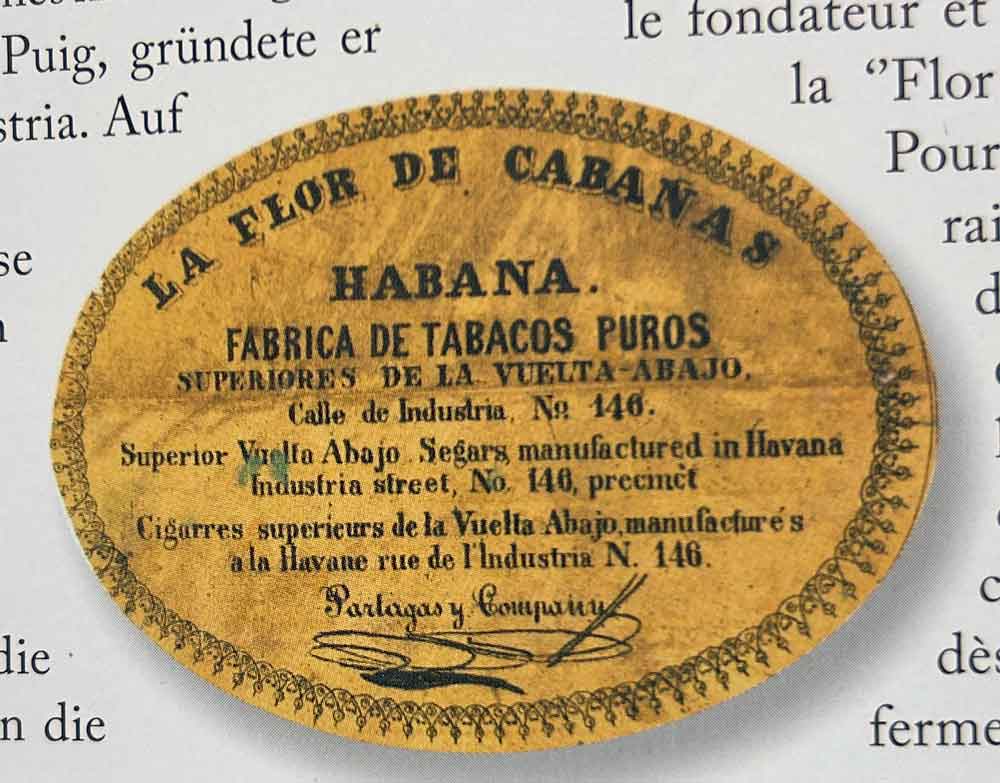
By 1840, the Cabañas brand was already so famous and highly regarded that even Jaime Partagás „stole“ this name to sell his own cigars. At the top it says: La Flor de Cabañas. Right at the bottom and much smaller: Partagás y Company. (Source: Amir Saarony and contributors: “Partagás – The Book”, ISBN: 978 0 9879290 1 3)
Handover to Anselmo GonzáValley of Leisure
Even after the legal dispute, the company remained family-owned. Manuel González Carvajal eventually handed the business over to his son-in-law Anselmo González de Valle.
At that time, the factory was located at Calle Dragones 4 and 6 in Havana.
Years later, around 1870, Anselmo González's daughter married a Spaniard named Leopoldo Carvajal; he came from a wealthy family and owned his own tobacco plantations in Pinar del Río, which earned him the title of „Marqués de Pinar del Río“. Furthermore, he owned his own factory where the brands Camelia del Japón, Carvajal y Carvajal, Dos Carvajales, Horcón, L. Carvajal and Pena de la Deva were produced.
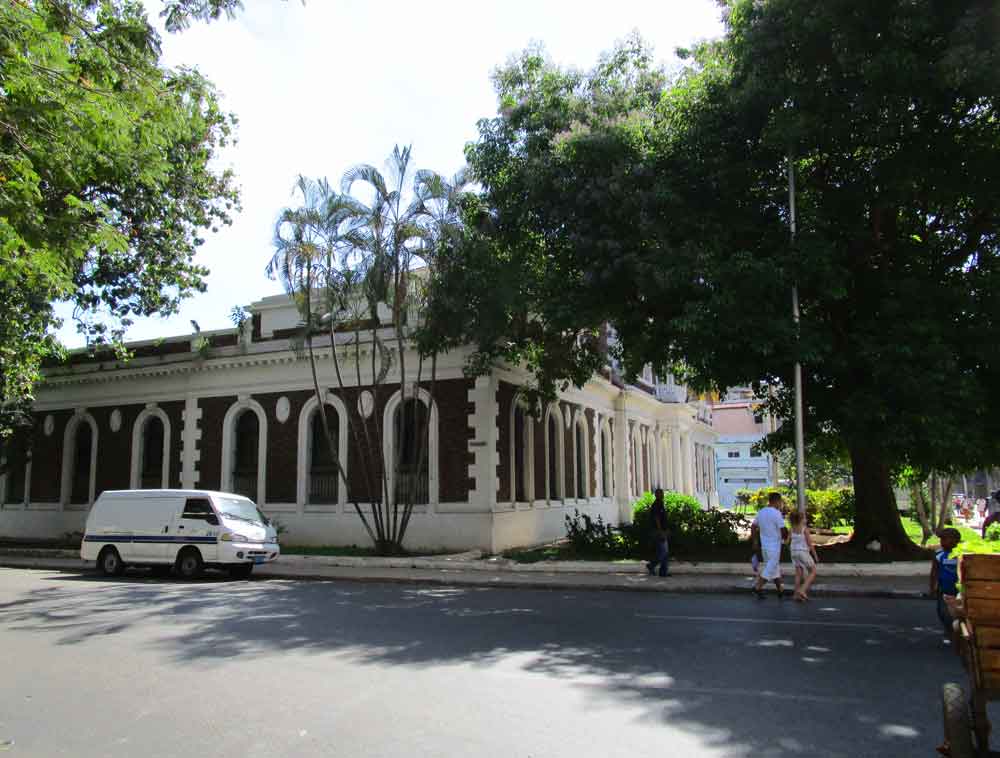
On Calle Dragones No. 4, 6 and 8, the Cabañas brand's factory was likely located from the 1840s to the 1870s under the leadership of Manuel Gonzalez Carvajal.
Unsettled times for Cuba's cigar industry
Between approximately 1870 and 1905, Cuba experienced a politically and economically difficult period. The Cubans' struggle for independence significantly influenced the entire economy, and therefore the tobacco industry as well.
Many cigar manufacturers left the island or sold their factories and brands. At the same time, British and American investors took over large parts of the Cuban cigar industry.
Takeover by the American „Trust“
The Cabañas brand was not spared from this development either. As a result, the business was sold in 1902 to the „Havana Commercial Co.“, a subsidiary of the „American Tobacco Co.“ The sale included the factory with all its cigar and cigarette brands, as well as the remaining property, including tobacco plantations and urban land. Then „Henry Clay – Bock & Co.“ took over the brand. However, all these companies ultimately belonged to the so-called American „Trust“. Numerous well-known cigar companies were merged under this name.
At that time, the factory was located at Calle Agramonte No. 10 – the building that also became known as the Iron Palace or the La Corona factory. The plot of land on which the factory was built is located directly next to the Presidential Palace, near the Malecón, and was part of the sales stock of the Cabañas brand/company.

In this house (also known as the Iron Palace or La Corona Manufactory), located at Calle Agramonte No. 10, the Cabañas brand cigars were manufactured from 1904 (probably until the 1930s).
Cabinñas under „Tabacalera Cubana“
In 1932, the brand passed into the ownership of the newly founded “Tabacalera Cubana S.A.”, which was also part of the American „Trust“.
In the 1940 commercial register, the company appears under the name „Cabañas y Carbajal“. Why the name was changed from Carvajal to Carbajal is not known today.
End of production due to the embargo
Before and during the Cuban Revolution, Cabañas cigars – along with over a hundred other brands – were manufactured at the La Corona factory. Part of the production already took place in the USA at that time, but using Cuban tobacco.
Since the brand had been under American ownership for many decades and primarily produced for the American market, production ceased following the enactment of the US embargo in 1962. Demand in other markets was simply negligible.

The building with scaffolding on the right is the former Iron Palace, Havana's largest cigar factory, built in 1904. To its left is the Presidential Palace (now the Museum of the Revolution). The Cabañas cigars were also made in the Iron Palace, alongside around 90 other brands.
The restart of Cabañs
However, the brand's story was not over. In 1987, plans began for a revival, which was eventually implemented in 1989. Cabañas returned to the market together with the La Corona and Belinda brands.
The new range comprised seven different cigar formats. Unlike the original Cabañas cigars, however, these were exclusively machine-made. Production was primarily aimed at the socialist states of the time, such as the Soviet Union, Bulgaria, and Hungary.
Taste-wise, the new cigars also differed significantly from their historical predecessors. They were deliberately produced to be milder and adapted to the smoking habits of the new target markets.

The cigar bands of the Cabañas brand, reintroduced in 1989, were adapted to the new logo with the letters CABS. The cigars, produced between 1898 and 2005, were all machine-made. (Source: Min Ron Nee: “AN ILLUSTRATED ENCYCLOPAEDIA OF POST-REVOLUTION HAVANA CIGARS”; Hong Kong 2003, ISBN: 978-3980930826)
The final end of the brand.
Production of the first formats was discontinued in 2003. Two years later, in 2005, manufacturing ceased entirely.
With this, one of the most traditional brands in Cuban cigar history finally disappeared from the market. Today, Cabañas cigars exist only as an important chapter in the history of Habanos.
To the point
Cabañas cigars are among the oldest and most traditional brands in Cuban cigar history. Although they have not been produced since 2005, their influence on the development of Habanos remains undisputed to this day.
Here you will find the Cabañas Manufactory
If the live folder does not work, Please click here for the Cabañas Manufactory.
Picture credits
- Claudia Puszkar
- Habanos S.A.
Curated for you
External website: Experience the Habanos Club in Germany
At Origin Of Cigar: THE PLEASURE LETTER by Origin Of Cigar: A curated email celebrating the fine pleasures of Cuban cigar culture.
Historical Habanos manufactories documentary film
In this film, their stories - and their true faces - are uncompromisingly revealed. This is far more than just a documentary film - it is a journey into the soul of Cuba.

What is in your drawers?
Some chapters in the history of cigars still lie in hidden in drawers, archives or private collections. Do you own Records, documents or references to Cuban cigar brands? Or do you know Sources, that could help with historical research? Then please send us an e-mail. Claudia Puszkar will contact you personally and discuss everything else with you. Together we can Bringing buried stories back to light. 👉 admin@origin-of-cigar.com
New to Cuban cigars? Or deep into it?
FAQ - Read the frequently asked questions
Open the glossary of Cuban cigars
Who is behind Origin Of Cigar?
Who we are and how you can reach us → Please click here
Cabin Photo Gallery
If you do not see the photo gallery, Click here for the Cabañas photo gallery

References
- Min Ron Nee:
- “AN ILLUSTRATED ENCYCLOPAEDIA OF POST-REVOLUTION HAVANA CIGARS” / Hong Kong 2003, ISBN: 978-3980930826
- Instituto de Investigaciones del Tabaco Cuba:
- „The world of Habanos“ / Havana 2013, ISBN: 978-959-7212-08-9
- Adriano Martínez Rius:
- “Habano the King” / Barcelona 1998, ISBN: 84-930387-1-7
- Adriano Martinez Rius:
- “The Great Habano Factories” / Barcelona 2005, ISBN: 84-609-4024-1
- Orlando Quiroga:
- “El Habano al rojo vivo” / Havana 2002
- Enzo A. Infante:
- “Havana Cigars 1817-1960” / Neptune City 1997
- Eumelio Espino:
- “El Habano - De la semilla al puro en 539 pasos” / Madrid 2019, ISBN: 978-84-09-07091-6
- Alexander Groom:
- “El Habano Moderno” / Helios House Press 2022, ISBN: 978-911683-05-6
You are here:
 Deutsch
  Español
  English (UK)
  Français
  Italiano