
The fascinating Cohiba story - the legend and myth of Cuba's most famous cigar

The Cohiba history is closely linked to Cuba's soul. The Cohiba brand - the most famous cigar brand in the world - is both a legend and a myth. Everyone knows the name. Cigar smokers all over the world love it. Even people who would never smoke a cigar in their lives know what a Cohiba is. It is considered the best known Habano the world - and symbolises Cuba's tobacco culture.
Where do cigars come from?
Table of contents

Marriage proposals have been made on these steps and no visitor fails to have their photo taken on them.
How it all began
It is the time before the victory of the revolution. Fidel Castro, Che Guevara and their comrades-in-arms are hiding in the Sierra Maestra. Supported by locals and two journalists from the New York Times they fight against the regime. Even then, it becomes clear: Good marketing is everything - a detail that would later Cohiba history will shape the future.

Fidel Castro, revolutionary for life. He loved cigars.
Cigars in the jungle
In the mountains, the revolutionaries not only needed food and weapons, but also - as true Cubans - cigars. How they managed to get tobacco and roll cigars under these circumstances remains fascinating and phenomenal under the circumstances!

And so the sheets are stacked on top of each other in the barrels and carefully labelled.
The victory of the revolution
In 1959, the time had come: victory was announced in Havana. The revolutionaries triumphantly marched into the capital. Cuba changed radically. Factories and businesses were nationalised and a new era began. There must have been great enthusiasm among the population. But with all this work, there was one thing that could not be missed - a good cigar. Even in the Sierra Maestra, it had brought relaxation and cohesion.
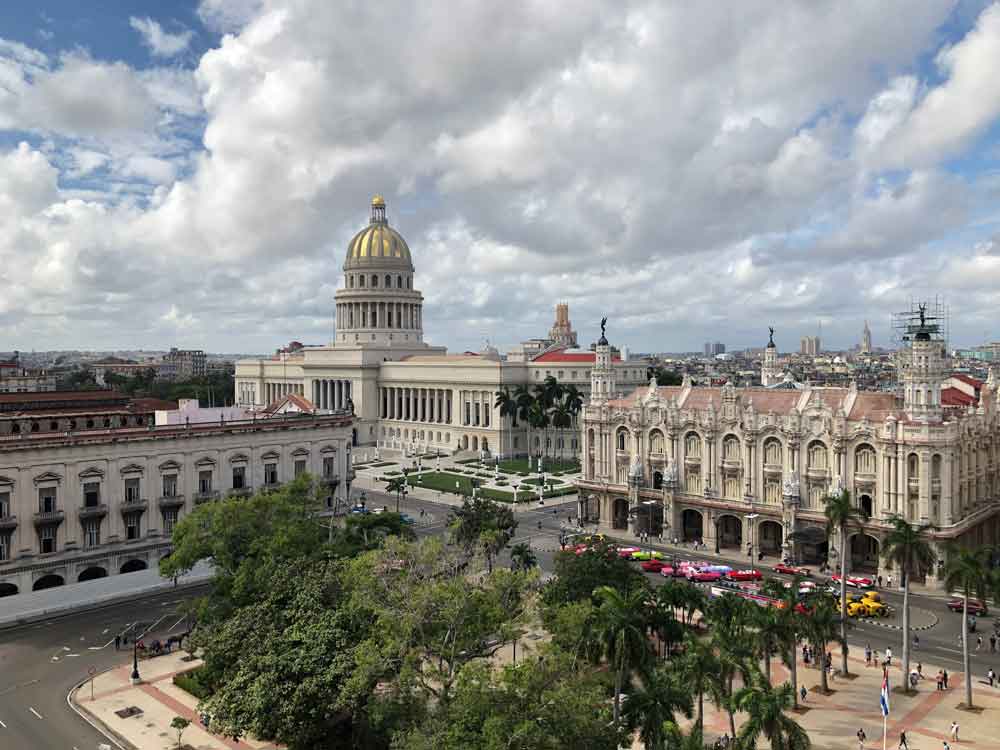
Havana, the capital of Cuba. In January 1959, the revolutionaries were victorious.
Old brands, new brands
There were numerous cigar factories in Havana that continued to produce excellent cigars. But there were also private „Fuma“ cigars - hand-rolled for personal consumption. One of these cigars was to change Fidel Castro's life and lay the foundation for the Cohiba history lay.

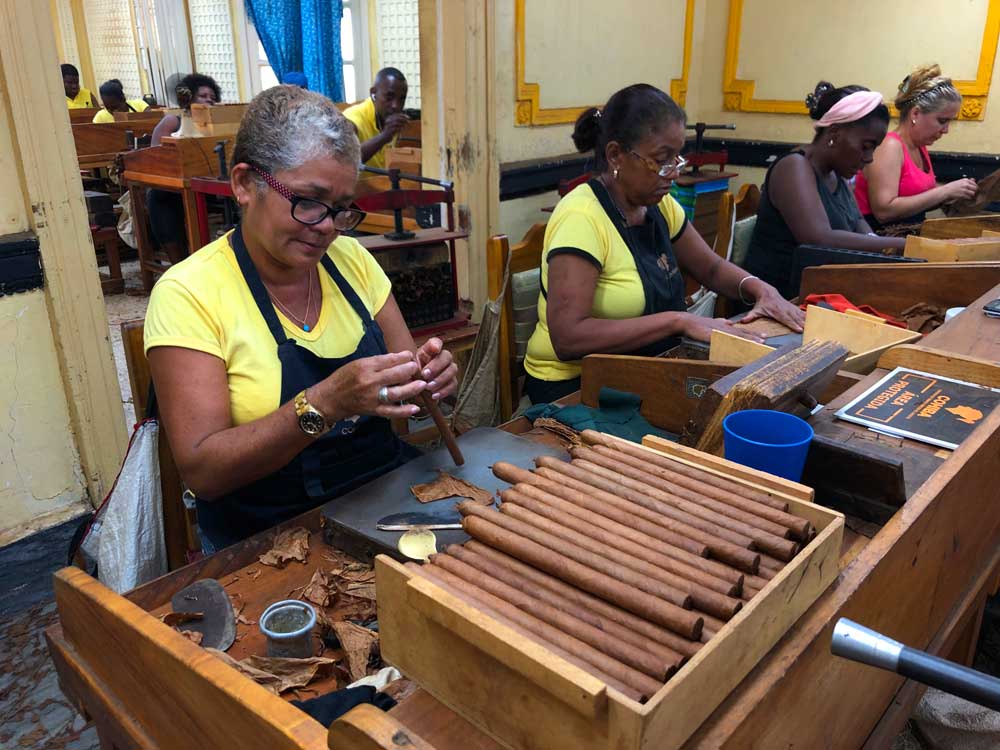
The cigars that have just been rolled by the torcedores are placed in these mini roderos. This is followed by quality control.
Fidel's favourite cigar - the beginning of the Cohiba story
Fidel Castro had a bodyguard: Bienvenido „Chicho“ Perez. His friend Eduardo Rivera rolled cigars. Chicho smoked them regularly - until Fidel recognised their aroma and tried one. A long, slim cigar. That was in 1963 and Fidel was thrilled - and wanted more.

Fidel Castro loved these long and slim cigars. Today they are a little out of fashion, but who knows, maybe they will make a comeback.
Not only for yourself, but also for others
This enthusiasm gave rise to an idea: they could set up their own factory. In 1964, production began in a former country club. Eduardo Rivera led the project, supported by Celia Sanchez, a close comrade-in-arms of Fidel. She also suggested the name: Cohiba - a term from the Taíno language, which was used to describe the tobacco angle that the indigenous people smoked. (((( Note: Link to the interview Juanita -> also published on OOC))))).

Celia Sánchez, here next to Fidel. The two fought side by side. We have her to thank for the name of the world-famous Habano: Cohiba.
The secret factory El Laguito - the most beautiful factory in women's hands
In 1967, production moved to a sugar baron's villa - a magnificent location that is still known today as the El Laguito known. Eduardo Rivera became the first director. Celia Sanchez promoted women in the factory: more than half of the workers were female - a symbol of socialist equality. The location remained secret; only a few people knew where Fidel's cigars were actually made.

Isn't it beautiful? The Cohiba factory „El Laguito“ in Havana.
Images, rumours, sightings - the myth awakens
Fidel Castro was soon never seen without his long, slim cigar. Speculation grew. Boxes of these cigars appeared - but only as gifts for heads of state, diplomats and VIPs. You couldn't buy them anywhere. The brand did not officially exist, but its Myth grew.

„Fidel entre nosotros: Fidel is among us.“ The Cohiba factory „El Laguito“ is Fidel Castro's factory. This is where „his“ cigar, the Laguito No.1, was made, and the name refers to the factory.
An official brand is created
The first cigar - the Lancero - was soon supplemented by other formats. The result was a simple but ingeniously designed cigar ring in the iconic black and white chequered pattern. In 1982, the Cohiba brand was officially launched - with a glamorous presentation at the Ritz Hotel in Madrid. The demand was overwhelming. Previously, the cigar rings bore the names of the VIPs who received them as gifts. With the official launch, they now appear in a standardised, brand-typical design.

The current Cohiba cigar ring (as of 2025): Perfect in gold, yellow, black and white, a sight to make the hearts of cigar lovers beat faster.
What makes the Cohiba special
The secret of its success: two filler tobaccos are fermented a third time - a process that no other Habano uses. Only the best leaves from the Vuelta Abajo find their way into the Cohiba.
This is how an improvised „Fuma“ became the most famous cigar in the world - and their history a piece of Cuban identity.

Tobacco is also stored in barrels at the Cohiba factory. Centuries of experience have gone into this form of storage.
Here you will find the Cohiba El Laguito manufactory
If the live folder does not work, please click here for the Cohiba El Laguito manufactory.
Picture credits
- Claudia Puzskar
- Photo Fidel Castro / Wikipedia
- Photo Celia Sánchez / Wikipedia
Curated for you
External website: El Laguito Cohiba Manufactory, information on Wikipedia
At Origin Of Cigar: Talk 👉 The unique Cohiba El Laguito story - Juana Ramos Guerra and her life for Cohiba
Historical Habanos manufactories documentary film
In this film, their stories - and their true faces - are uncompromisingly revealed. This is far more than just a documentary film - it is a journey into the soul of Cuba.

What is in your drawers?
Some chapters in the history of cigars still lie in hidden in drawers, archives or private collections. Do you own Records, documents or references to Cuban cigar brands? Or do you know Sources, that could help with historical research? Then please send us an e-mail. Claudia Puszkar will contact you personally and discuss everything else with you. Together we can Bringing buried stories back to light. 👉 admin@origin-of-cigar.com
New to Cuban cigars? Or deep into it?
FAQ - Read the frequently asked questions
Open the glossary of Cuban cigars
Who is behind Origin Of Cigar?
Who we are and how you can reach us → Please click here
Photo gallery Cohiba history
If you do not see the photo gallery, please click here for the Cohiba / El Laguito photo gallery



References
- Min Ron Nee:
- “AN ILLUSTRATED ENCYCLOPAEDIA OF POST-REVOLUTION HAVANA CIGARS” / Hong Kong 2003, ISBN: 978-3980930826
- Instituto de Investigaciones del Tabaco Cuba:
- „The world of Habanos“ / Havana 2013, ISBN: 978-959-7212-08-9
- Adriano Martínez Rius:
- “Habano the King” / Barcelona 1998, ISBN: 84-930387-1-7
- Adriano Martinez Rius:
- “The Great Habano Factories” / Barcelona 2005, ISBN: 84-609-4024-1
- Orlando Quiroga:
- “El Habano al rojo vivo” / Havana 2002
- Enzo A. Infante:
- “Havana Cigars 1817-1960” / Neptune City 1997
- Eumelio Espino:
- “El Habano - De la semilla al puro en 539 pasos” / Madrid 2019, ISBN: 978-84-09-07091-6
- Alexander Groom:
- “El Habano Moderno” / Helios House Press 2022, ISBN: 978-911683-05-6
You are here:


 Deutsch
  Español
  English (UK)
  Français
  Italiano