
Saint Luis Rey Cigars: The Fascinating British Habanos Brand with an Exclusive History


Saint Luis Rey History/ Founded in the 1930s, Saint Luis Rey cigars were unavailable outside of Great Britain for almost six decades. This exclusivity alone made the brand one of the most fascinating Habanos lines ever.
Where do cigars come from?

Table of contents

San Luis, the name of a city and a municipality in the province of Pinar del Río in western Cuba.
To the point
Saint Luis Rey cigars are among the well-known Habanos brands. Their decades of exclusivity for Great Britain and their powerful character make them a special brand within the world of Habanos to this day.
What are Saint Luis Rey cigars?
Saint Luis Rey cigars are among the very special Habanos brands and have been around for almost 100 years. Until the 1990s, they were exclusively intended for the British market, occupying a special position within the Habanos portfolio. Although they were not a classic Edición Regional, the brand functioned practically like an exclusive regional edition for decades.

The Saint Luis Rey brand is a traditional Habanos brand. It was introduced in the 1940s.
What makes Saint Luis Rey cigars special?
The special thing about Saint Luis Rey cigars is their exceptional exclusivity. According to a contract from 1940, the brand was only allowed to be distributed in the UK. Even after the Cuban Revolution, this agreement remained in place, or more precisely, a new contract was even concluded.
Habanos only began exporting the brand worldwide in 1993. At the same time, Saint Luis Rey cigars have enjoyed an excellent reputation among cigar connoisseurs for decades, thanks to their intense and full-bodied flavour.

The brand name most likely refers to San Luis, located in Pinar del Rio in the west of the island.
Classification within the Habanos world
While Saint Luis Rey cigars are among the smaller brands in the Habanos portfolio today, they hold a high regard among connoisseurs. The brand is particularly frequently used for Edición Regionales. To date, ten different strictly limited regional editions for individual markets have been released.
Facts about Saint Luis Rey cigars
Introduction: late 1930s
Export register: entry 1940
Special feature: exclusively for the UK market for decades
* Production: Tobaccos from Vuelta Abajo and Semi Vuelta
Current standard format: Saint Luis Rey Regios (48 × 127 mm)

The Saint Luis Rey Regios cigar is now the only format in the brand's portfolio. The cigar has a 48 ring gauge with a length of 127mm.
The creation of the brand
According to Adriano Martinez, one of the most prominent connoisseurs of Cuban cigar history, the brand originated in the late 1930s. The owner and founder was the British firm Zamora and Guerra. In the official export register of 1940, the brand appears with its headquarters at Calle Máximo Gómez 810 in the district of Centro Habana in Havana. In addition to Saint Luis Rey cigars, cigars of the brands Belanza, Coranto, Flor de Santa Gertruda, La Loma, La Noble Habana, Landsdown, La Zona, and Lions were also produced.
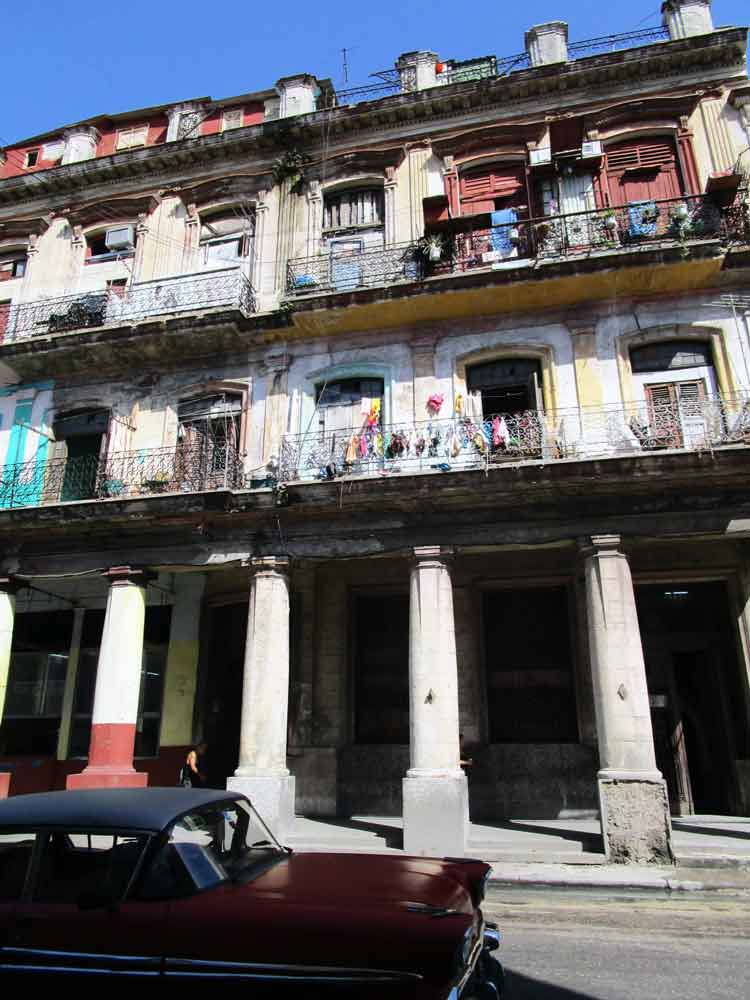
The Saint Luis Rey cigar factory was located at Calzada del Monte No. 810. The house itself is no longer standing, only numbers 808 and 812 remain. House No. 810 would certainly have looked the same: pillars at the bottom, with one or two storeys above.
The name Saint Luis Rey originates from the Spanish missionary San Luis Rey de Francia.
There are two explanations for the origin of the name.
The first version traces the name back to the novel „The Bridge of San Luis Rey“ by the American author Thornton Wilder. The work was published in 1927 and was successfully filmed in 1944. It tells the story of five people who die when a suspension bridge collapses in the Andes. Highly recommended reading!
The second explanation is considered significantly more likely. According to this, the brand name combines the important tobacco-growing region of San Luis in Vuelta Abajo with the Spanish word „Rey“ for king. The.

The Pinar del Río region, and with it the municipality of San Luis, is Cuba's best tobacco-growing region.
Also interesting is the spelling of the name. „Saint“ uses the English spelling, while „Luis“ and „Rey“ are Spanish. The brand thus combines both linguistic origins.
For decades exclusively for Great Britain
The 1940 contract stipulated the exclusive distribution of the brand through the British firm N.R. Silverstone Cigar Limited, managed by Michael Keyser and Nathan Silverstone. Although individual vitolas were reportedly produced for the German market, the brand was, in principle, exclusively reserved for Great Britain.
During the Cuban Revolution, production continued without interruption. As early as 1960, a new contract was concluded between Cubatabaco S.A. and N.R. Silverstone Cigar Limited. This also confirmed the exclusivity for Great Britain and expressly prohibited exports to other countries.
This special status only ended in the 1990s. Since 1993, Habanos has exported Saint Luis Rey cigars worldwide. To this day, N.R. Silverstone distributes the brand in the United Kingdom, while all other Habanos are marketed there by Hunters and Frankau.
This logo of the Saint Luis Rey brand is found on the brand's cigar bands.
Today's range
Saint Luis Rey cigars are made from tobaccos from the Vuelta Abajo and Semi Vuelta regions. The brand is particularly known for its intense and strong flavour.
Today, the standard portfolio comprises only one format: the Saint Luis Rey Regios with a 48 ring gauge and a length of 127 millimetres. This format has been part of the range since the brand's introduction.
The selection used to be much more extensive. The portfolio was significantly reduced, particularly in the 1970s. Today, Saint Luis Rey regularly appears as a brand for sought-after Edición Regionales. Ten different, strictly limited regional editions have been released so far.

Even in the 1970s, the Saint Luis Rey brand's portfolio was very extensive. (Source: Min Ron Nee: “AN ILLUSTRATED ENCYCLOPAEDIA OF POST-REVOLUTION HAVANA CIGARS”, Hong Kong 2003, ISBN: 978-3980930826)
Not to be confused with San Luis Rey
Besides Saint Luis Rey, the brand San Luis Rey also existed. Despite the similar name, these are two completely different brands. San Luis Rey was only introduced at the end of the 1980s for a cigarillo project in collaboration with Villiger & Söhne. Production ended in 2000.
Here you will find the Saint Luis Rey factory
If the live folder does not work, Please click here for the Saint Luis Rey factory.
Picture credits
- Claudia Puszkar
- Habanos S.A.
Curated for you
External website: Experience the Habanos Club in Germany
At Origin Of Cigar: THE PLEASURE LETTER by Origin Of Cigar: A curated email celebrating the fine pleasures of Cuban cigar culture.
Historical Habanos manufactories documentary film
In this film, their stories - and their true faces - are uncompromisingly revealed. This is far more than just a documentary film - it is a journey into the soul of Cuba.

What is in your drawers?
Some chapters in the history of cigars still lie in hidden in drawers, archives or private collections. Do you own Records, documents or references to Cuban cigar brands? Or do you know Sources, that could help with historical research? Then please send us an e-mail. Claudia Puszkar will contact you personally and discuss everything else with you. Together we can Bringing buried stories back to light. 👉 admin@origin-of-cigar.com
New to Cuban cigars? Or deep into it?
FAQ - Read the frequently asked questions
Open the glossary of Cuban cigars
Who is behind Origin Of Cigar?
Who we are and how you can reach us → Please click here
Saint Luis Rey Photo Gallery
If you do not see the photo gallery, Please click here for the Saint Luis Rey Photo Gallery

References
- Min Ron Nee:
- “AN ILLUSTRATED ENCYCLOPAEDIA OF POST-REVOLUTION HAVANA CIGARS” / Hong Kong 2003, ISBN: 978-3980930826
- Instituto de Investigaciones del Tabaco Cuba:
- „The world of Habanos“ / Havana 2013, ISBN: 978-959-7212-08-9
- Adriano Martínez Rius:
- “Habano the King” / Barcelona 1998, ISBN: 84-930387-1-7
- Adriano Martinez Rius:
- “The Great Habano Factories” / Barcelona 2005, ISBN: 84-609-4024-1
- Orlando Quiroga:
- “El Habano al rojo vivo” / Havana 2002
- Enzo A. Infante:
- “Havana Cigars 1817-1960” / Neptune City 1997
- Eumelio Espino:
- “El Habano - De la semilla al puro en 539 pasos” / Madrid 2019, ISBN: 978-84-09-07091-6
- Alexander Groom:
- “El Habano Moderno” / Helios House Press 2022, ISBN: 978-911683-05-6
You are here:


 Deutsch
  Español
  English (UK)
  Français
  Italiano