
Photos
The Cohiba photos show the legendary Cohiba manufactory El Laguito as few have ever seen it: elegant architecture, light-flooded factory halls, the smell of fermented tobacco in the air.

History
The gallery conveys a sense of atmosphere and history - from the colonial charm of the building to the rooms in which the famous Torcedoras the first Cohiba cigars were rolled. For aficionados of the brand, this is a rare visual journey through the origins of a legend. El Laguito, the birthplace of the Cohiba.
👉 Read now 👉 The fascinating Cohiba story - the legend and myth of Cuba's most famous cigar
Isn't it beautiful? The Cohiba factory „El Laguito“ in Havana.

The former villa of a sugar baron - you could get rich with sugar in Cuba...

The famous Cohiba head now adorns the terrace railing, with its striking black head in combination with the colours yellow and white.

Marriage proposals have been made on these steps and no visitor fails to have their photo taken on them.

How many hands have touched this knob? The staircase leads to the upper floor of the factory, past the Cohiba lettering.

A „Laguito“ torcedora at work, recognisable by her yellow Cohiba branded shirt. However, the workplace is typical and almost identical in all factories. Many women still work here today.

It depends on which tobaccos are on the table. The special thing about Cohiba cigars is that the filler tobaccos are fermented a third time.

The former villa has a spacious garden. There are other production buildings and marvellous green areas in the garden.

The tobacco leaves are moistened in this room at the Cohiba factory „El Laguito“. This must be done as evenly as possible; the leaves must not be too dry or too moist.

The legend of cigars rolled on the legs of virgins probably originated in this department of the factory, the leaf sorting department. However, only the leaves are placed on the legs.

Tobacco is also stored in barrels at the Cohiba factory. Centuries of experience have gone into this form of storage.

And so the sheets are stacked on top of each other in the barrels and carefully labelled.

„Fidel entre nosotros: Fidel is among us.“ The Cohiba factory „El Laguito“ is Fidel Castro's factory. This is where „his“ cigar, the Laguito No.1, was made, and the name refers to the factory.

This is what the factory looks like from behind; this is where the visitors' cars used to pull up.
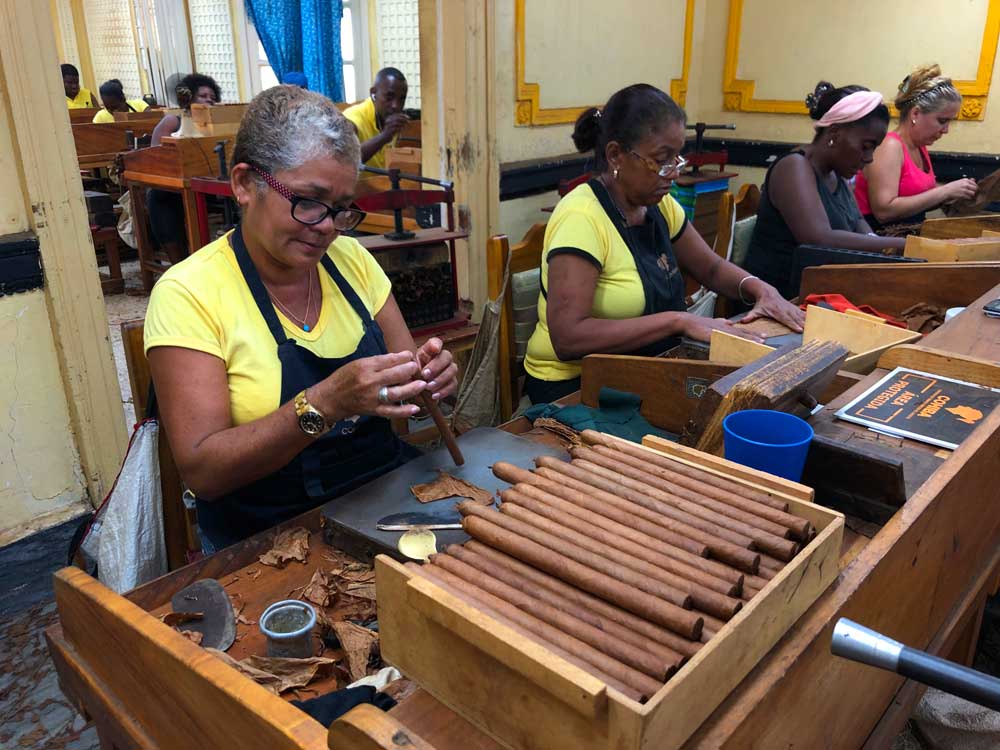
It is the long and slim formats that the Cohiba brand has always been known for. Fidel Castro favoured them, but today they have unfortunately gone a little out of fashion. But who knows, maybe they will make a comeback.

The cigars that have just been rolled by the torcedores are placed in these mini roderos. This is followed by quality control.

One of these quality controls is the measurement of draw resistance. The question is: does the cigar draw or not?

Fidel Castro, revolutionary for life. He loved cigars.

Fidel Castro loved these long and slim cigars. Today they are a little out of fashion, but who knows, maybe they will make a comeback.

Celia Sánchez, here next to Fidel. The two fought side by side. We have her to thank for the name of the world-famous Habano: Cohiba.

The current Cohiba cigar ring (as of 2025): Perfect in gold, yellow, black and white, a sight to make the hearts of cigar lovers beat faster.
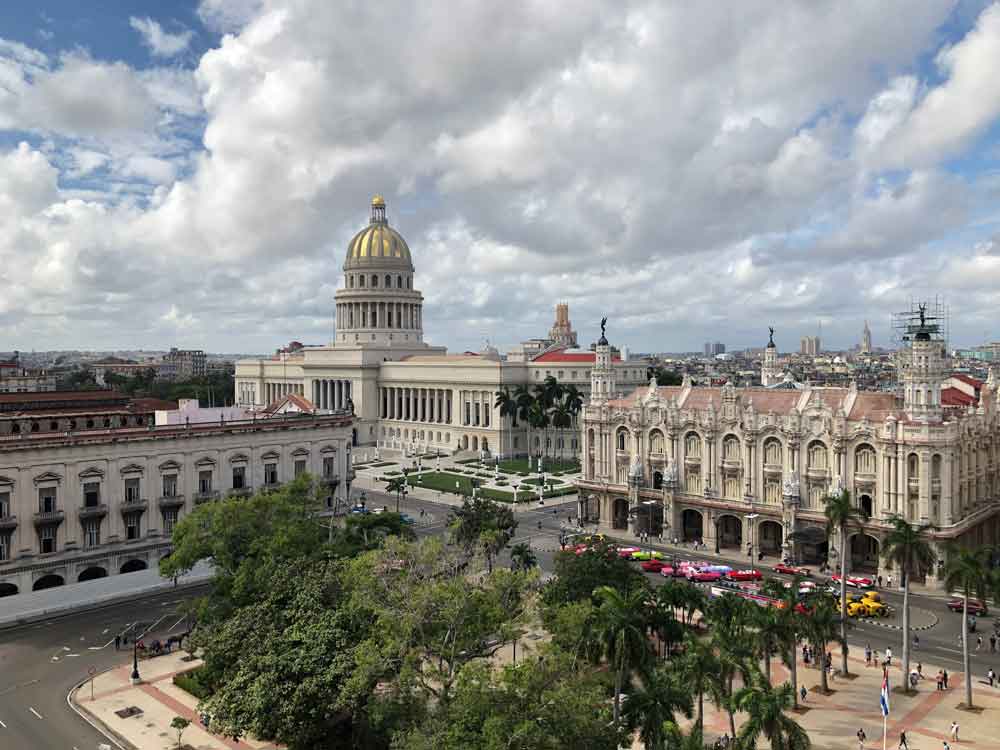
Havana, the capital of Cuba. In January 1959, the revolutionaries were victorious.
External website: Search Google for Cohiba history
 Deutsch
  Español
  English (UK)
  Français