
Quai d'Orsay history - A French-Cuban liaison with brilliant origins


The Quai d'Orsay story begins in the early 1970s with an unusual initiative. It is an extraordinary political impulse from a non-cigar smoker. Valéry Giscard d'Estaing, then Finance Minister and later President of France, wanted to have a cigar created that would carry his country's prestige around the world. It was to be light, elegant and could be paired with champagne and foie gras. It is worth noting that Giscard d'Estaing himself was not a cigar smoker; he may have been inspired by a box of cigars with his initials that he had received as a gift.
Where do cigars come from?
Table of contents
The new logo of the Quai d'Orsay brand, completely revised and modernised.
Perplexity at SEITA
The idea reached SEITA, the French tobacco monopoly authority - and at first nobody there knew what to do with it. The enquiry travelled from management level to management level without any clear direction. Eventually, the plan emerged to produce machine-made cigars in Bordeaux under the project name „Connétable“. However, designer Gilbert Belaudre realised that this concept could not meet France's standards and deliberately delayed the project. A year later, nothing had been achieved. What became of the Quai d'Orsay story?
The Quai-d'Orsay brand lettering is also used as the logo. Simple and yet beautiful.
A turning point: Handicrafts from Cuba
In 1971, after several retirements, Belaubre was given the project again - and now implemented a decisive reorientation. A cigar that was to represent France had to be hand-rolled and made from the best tobacco, ideally from Cuba. He convinced SEITA that a machine-made cigar from Bordeaux was not an option. An enquiry was then sent to Cubatabaco in Havana. Belaubre sent precise specifications, including a tasting form with around 30 criteria. He suggested tobaccos from San Juan and San Luis, which would give the blend fullness despite its light flavour.
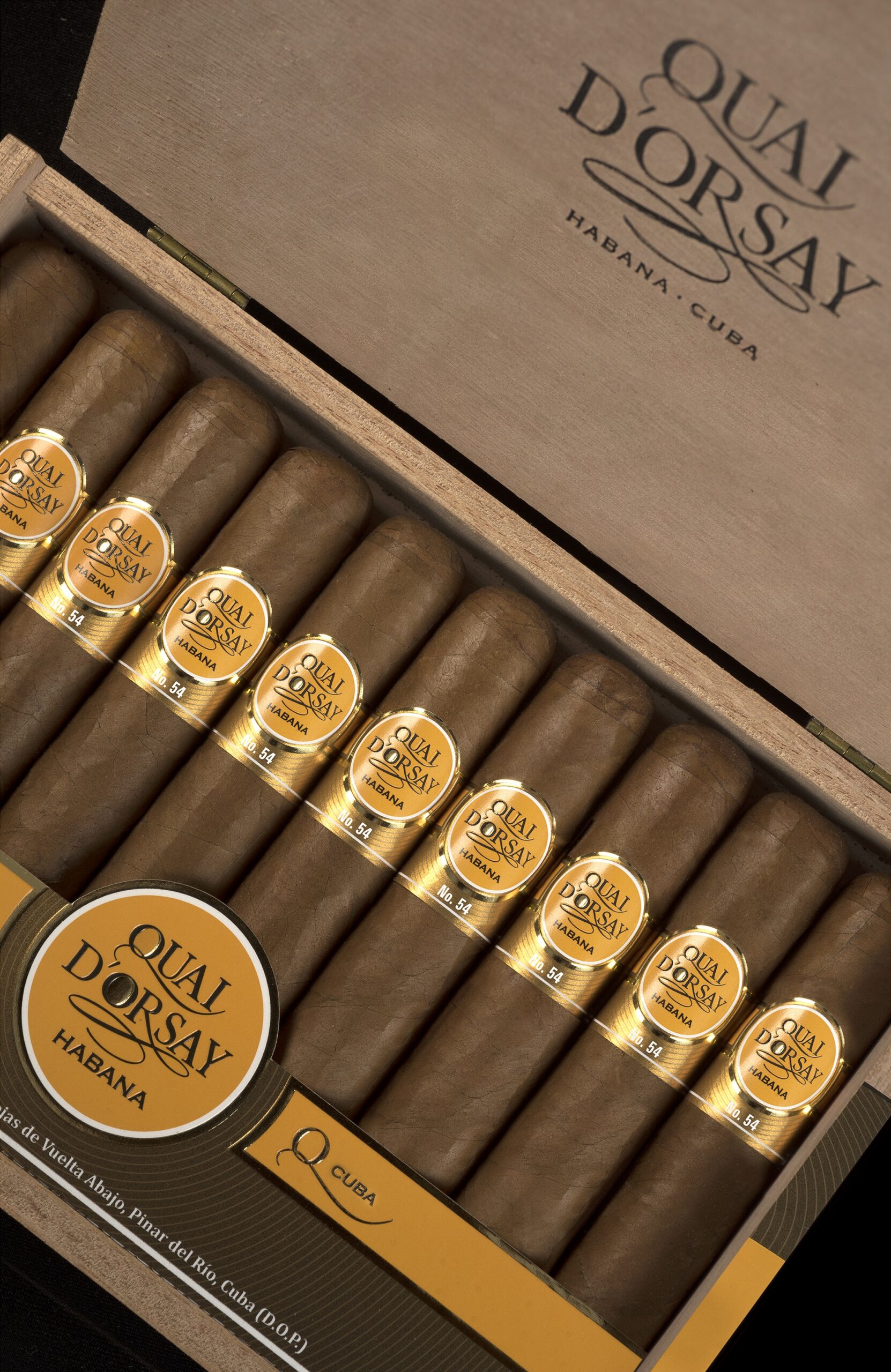
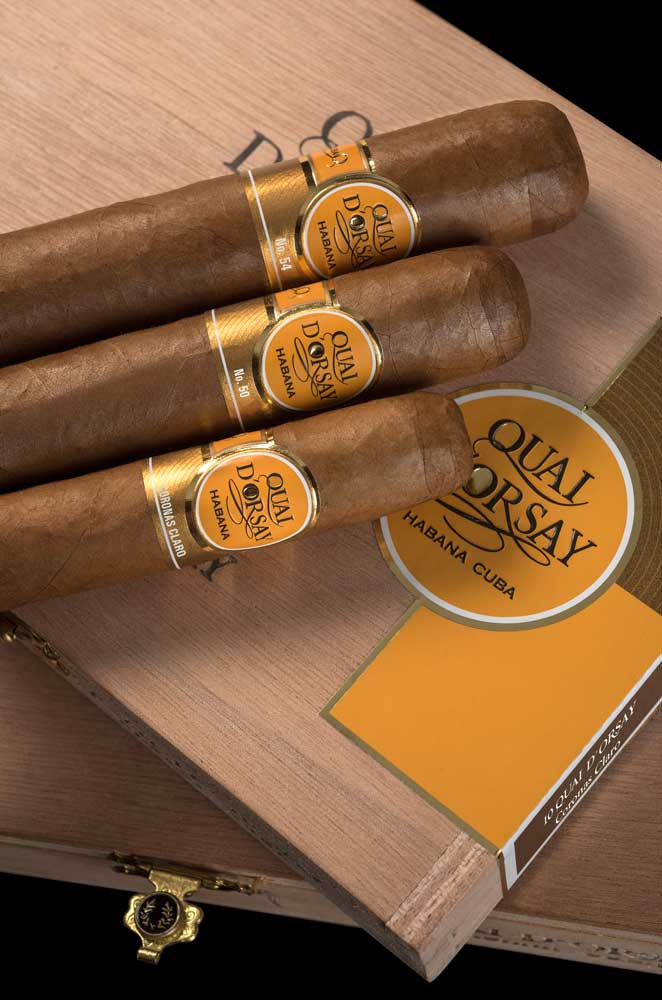
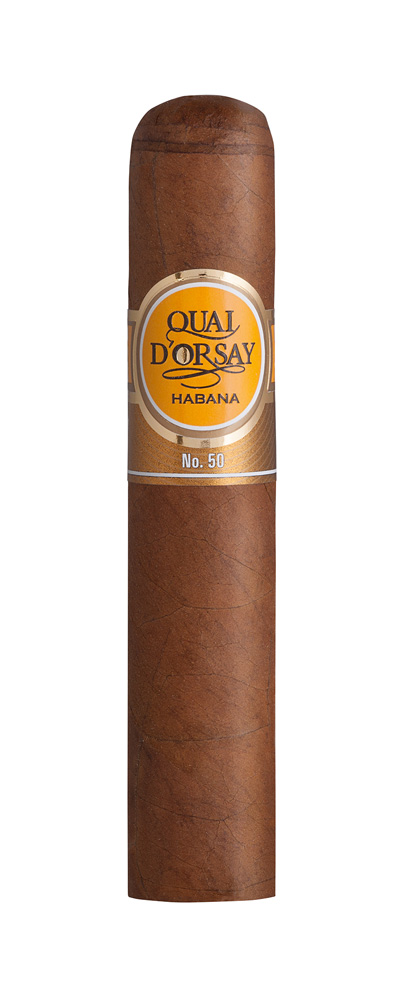
The Quai-d'Orsay brand design was completely relaunched in 2017. More intense in colour, clear and modern.
The name is created - and creates excitement
Cubatabaco replied two months later, followed by intensive correspondence. The Cubans demanded the trade mark rights, while France received exclusive distribution. A fair exchange, as SEITA had no alternatives. Belaubre wanted to call the brand „Quai d'Orsay“ - after the famous Parisian street where SEITA had its headquarters at number 53. However, in French, this name actually stands for the Ministry of Foreign Affairs. Belaubre feared that the name might be rejected. However, his request was delayed; by the time the Ministry heard about it, „Quai d'Orsay“ had already been officially registered.
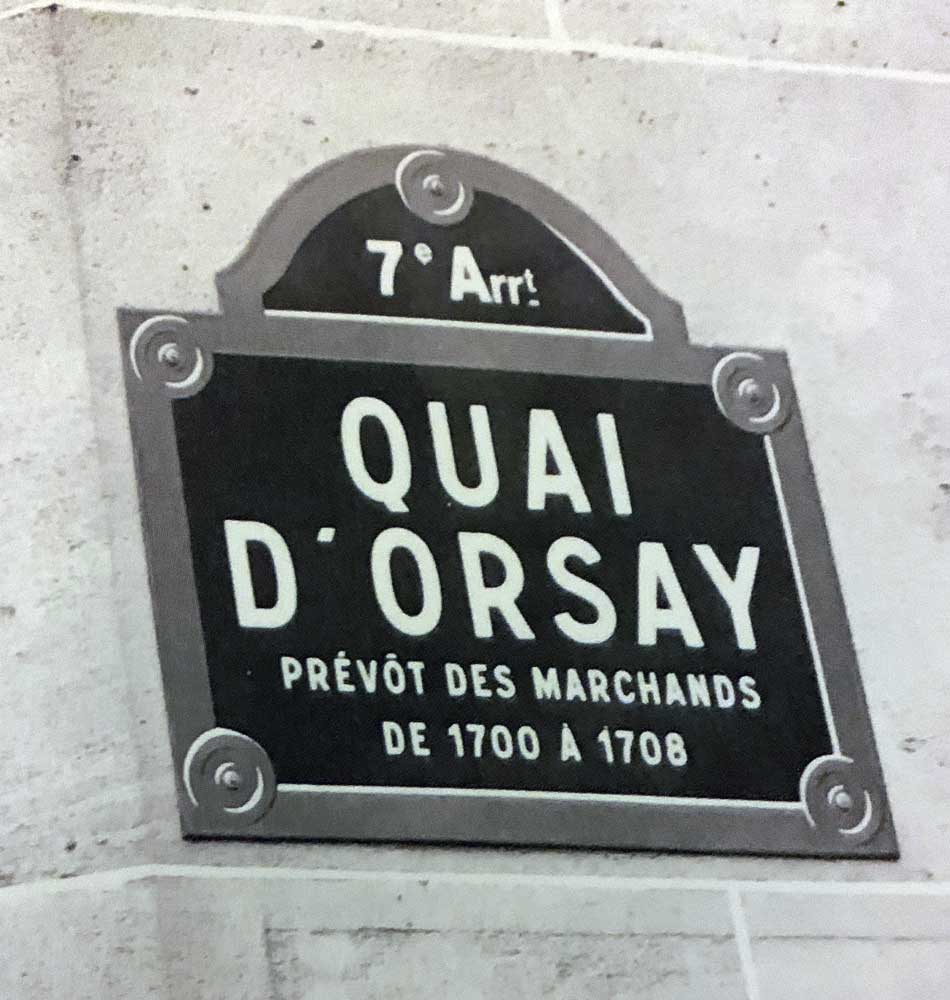
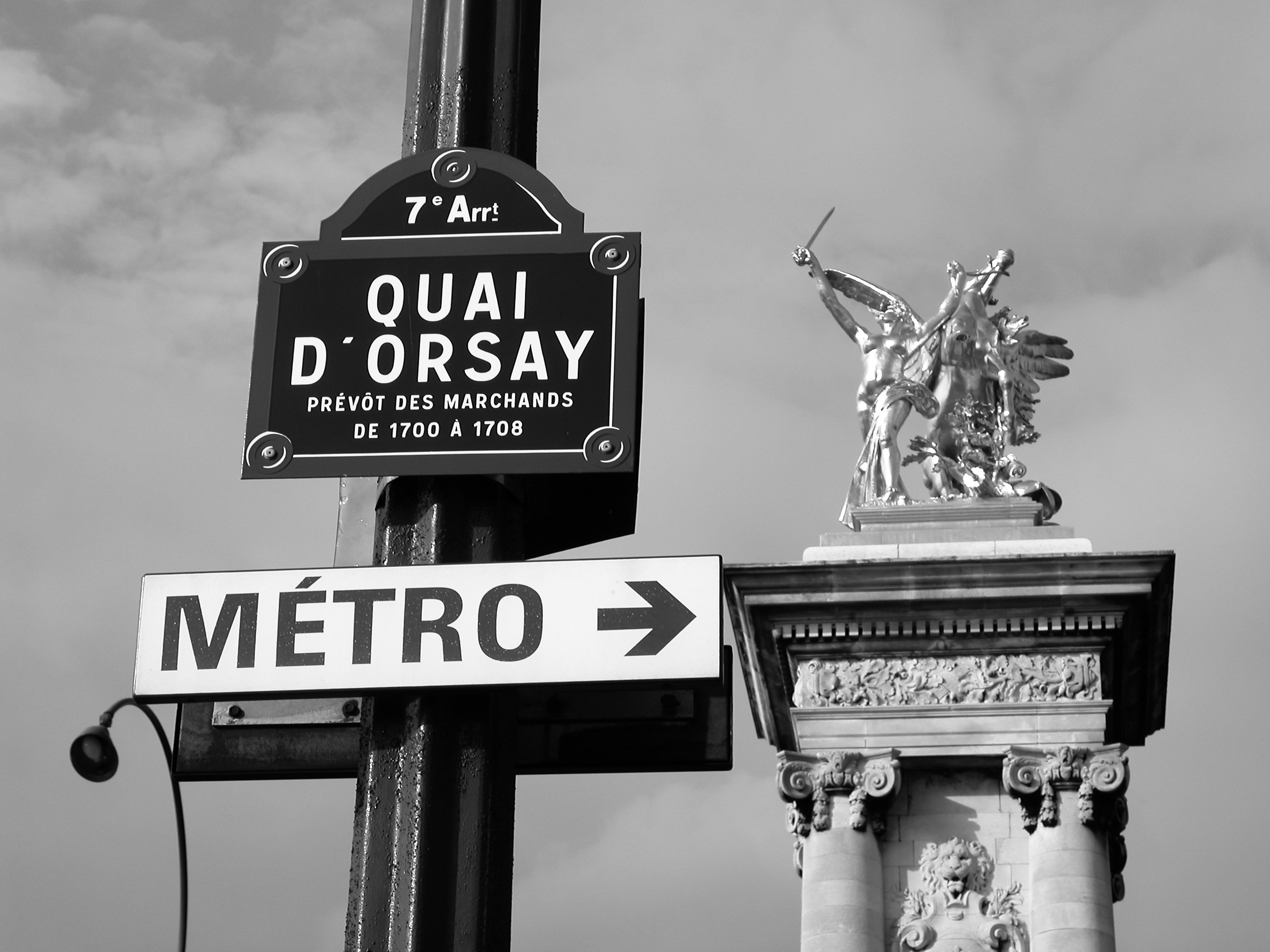
A nameplate of the street in Paris: Quai-d'Orsay; one of the best addresses in Paris, is also a perfect name for a cigar brand.
Twelve prototypes and an unusual detail in the history of the Quai d'Orsay
The Cubans developed twelve samples, of which five formats were selected: including the voluminous Imperiales, the long Panetella and three 42-cigar formats with light-coloured wrappers - a rarity at the time. The cigars were offered in boxes of 25, fitted with a small terracotta or limestone element that served as a mini humidor.
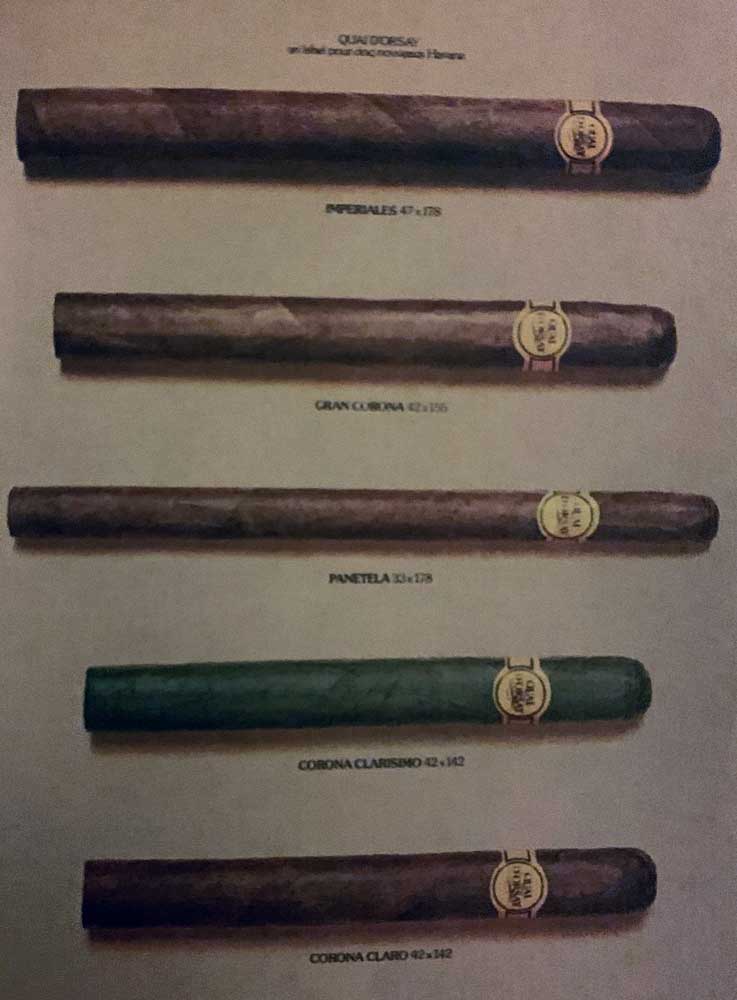
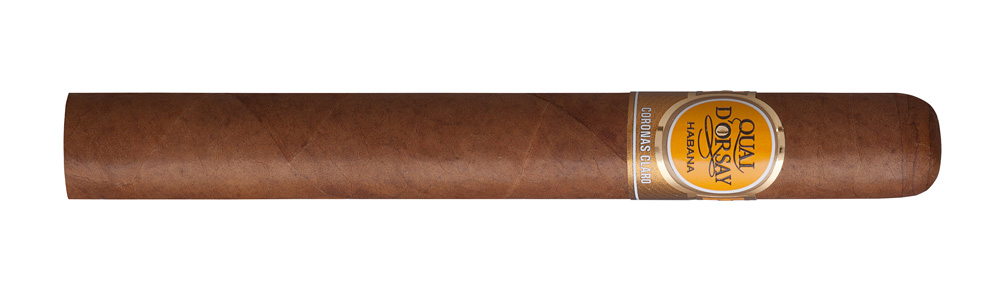
Five formats belonged to the Quai-d'Orsay brand in the 1970s: rather slender formats with light to very light-coloured wrapper leaves.
A glamorous start in Paris
The first 200,000 cigars were flown to Paris and stored at SEITA headquarters. On 8 November 1974, the launch took place in the world-famous ’Pied de Cochon„ restaurant - without Giscard d'Estaing, who had moved into the Élysée in the meantime. Initially, the cigars were only available in France, later also in a few other countries.
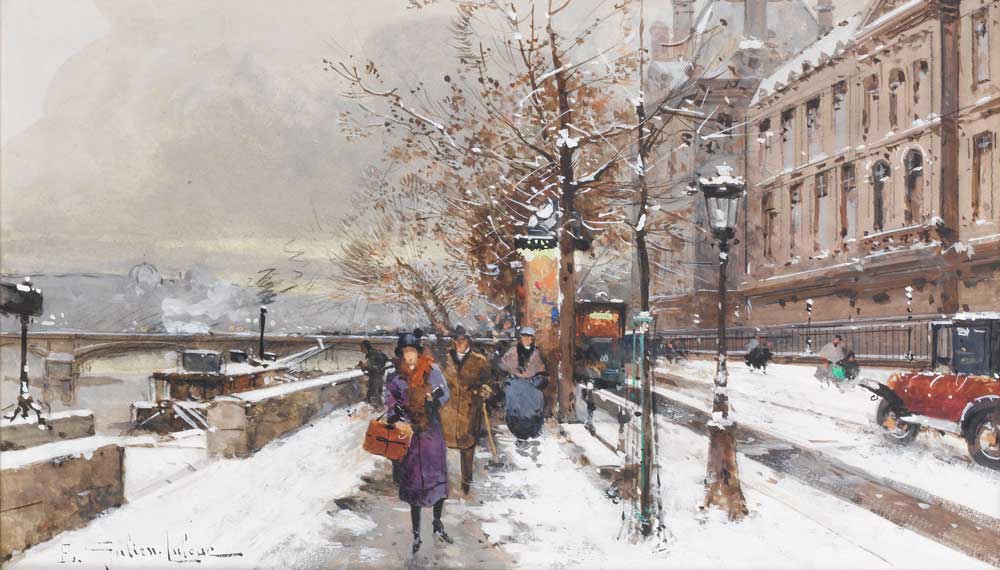
Quai-d'Orsay, world-famous and one of the most famous streets in Paris, in the 7th arrondissement of Paris, on the Rive Gauche, the left bank of the Seine, between the Pont de la Concorde and the Pont de l'Alma.
Challenges and a political dinner
From 1989, the economic situation in Cuba deteriorated and supplies collapsed. The now privatised SEITA therefore concluded an agreement with Cubatabaco in 1995: France paid 24 million francs for tobacco production and received cigars in return. In 1996, Fidel Castro personally thanked the company at a dinner in Havana.
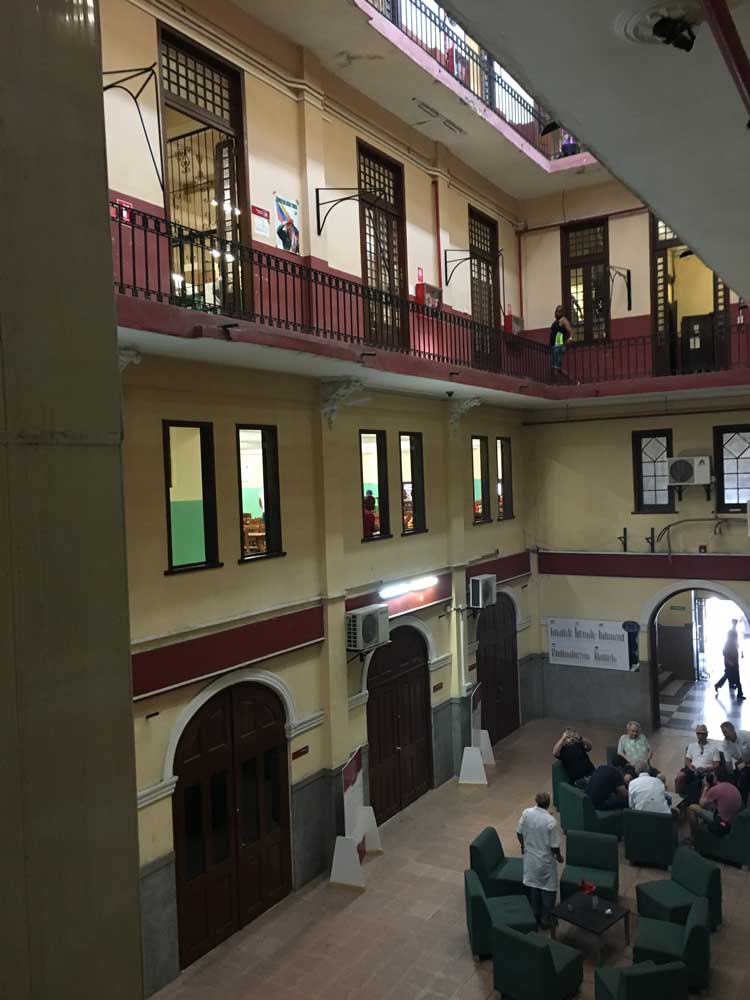
Casa Matriz is the parent company where the cigars of a particular brand, in this case Quai-d'Orsay, are made.
Mergers, new starts and changing preferences
In 1999, SEITA merged with the Spanish tabacalera to form Altadis, which subsequently worked closely with Habanos S.A.. In 2004, an attempt was made to relaunch the brand with classic formats. However, the preferences of aficionados had changed significantly over the three decades and the attempt was unsuccessful.
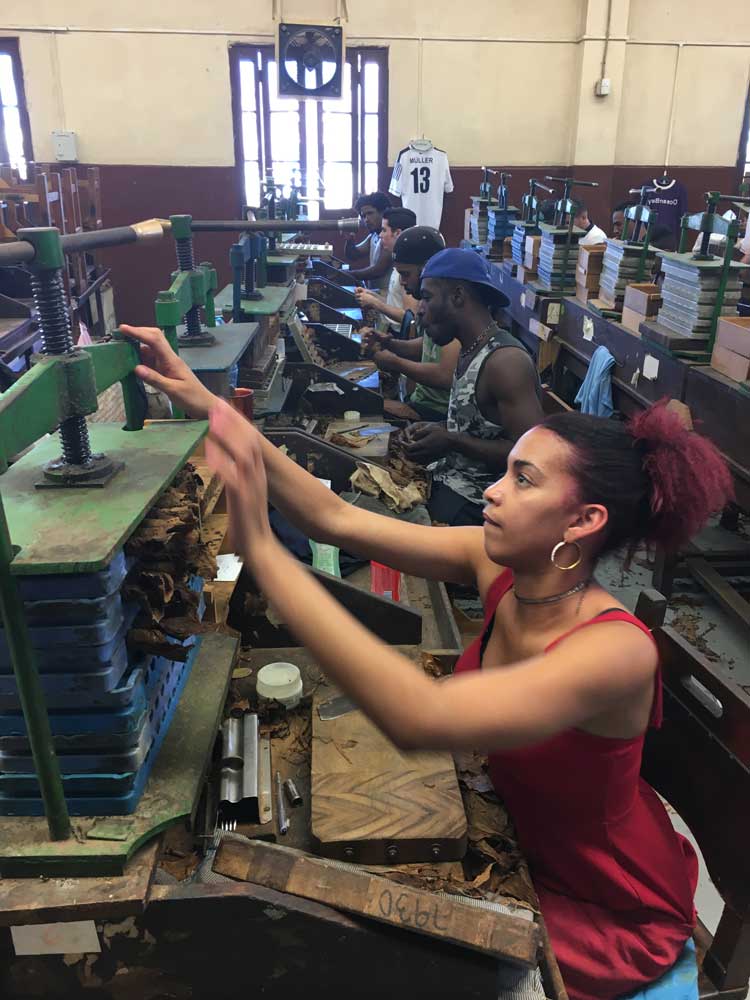
In today's Partagás factory, where the Quai-d'Orsay brand cigars are made, many other brands are of course also produced.
The renaissance of 2017
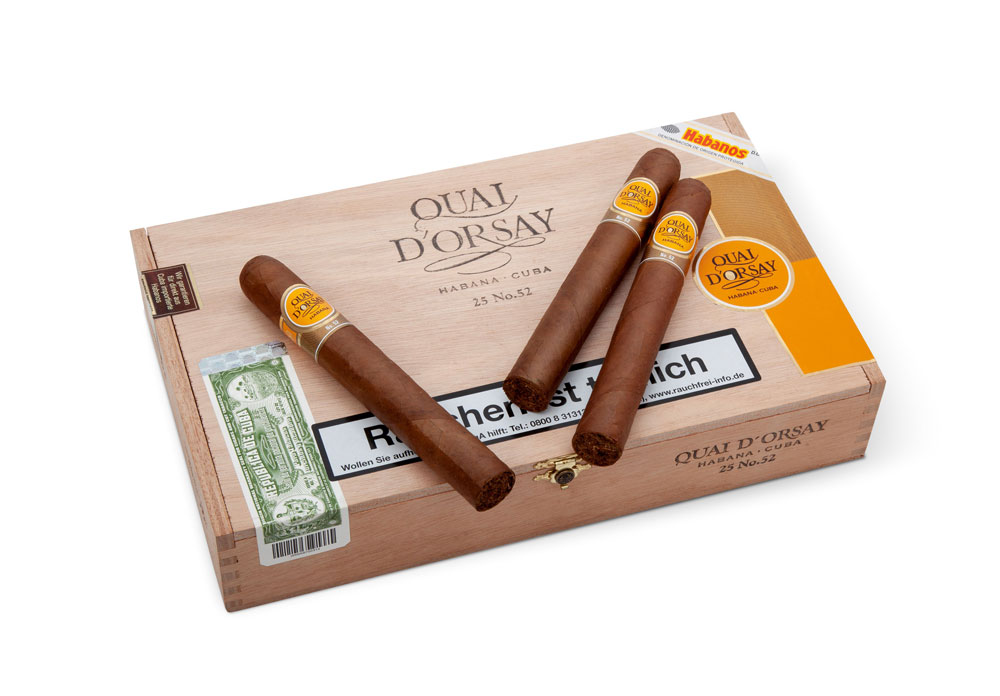
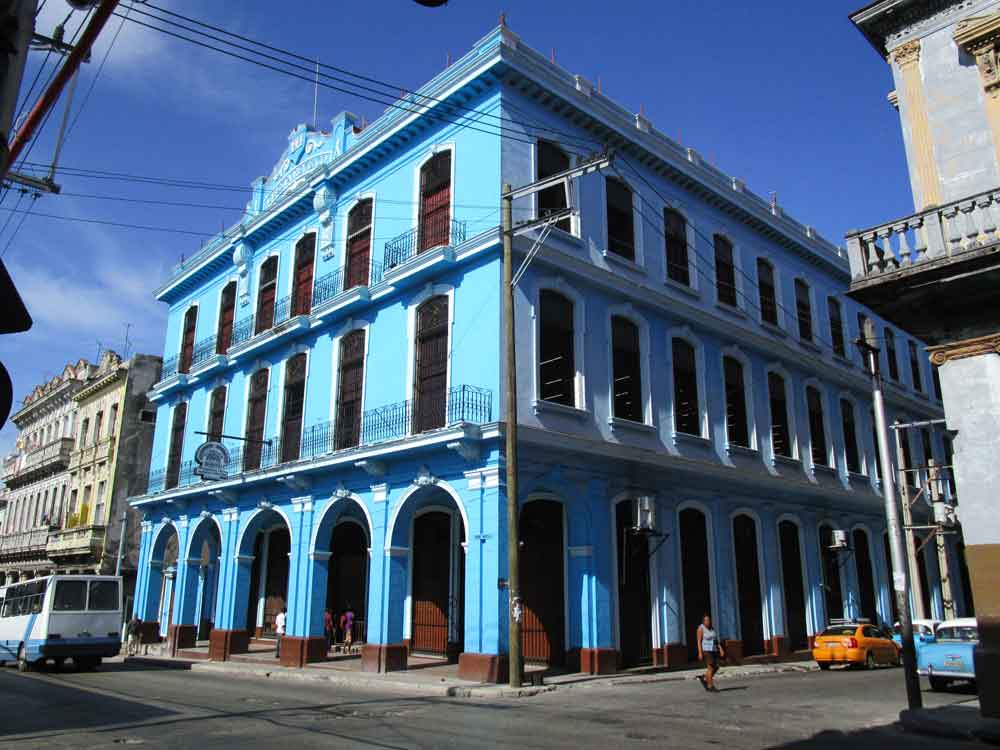
It was not until 2017 that the brand experienced its impressive rebirth. New ring and box designs, modern formats with a larger ring gauge and a revised brand image led to great success. Today, Quai d'Orsay is recognised as a light, elegant brand with tobacco from the Vuelta Abajo - a cigar with subtle depth and a fascinating origin. Over the years, Quai d'Orsay cigars have been produced in the Romeo y Julieta factory on Calle Belascoain No. 852. Today, the brand's Casa Matriz is the Partagás factory on Calle San Carlos in Havana.
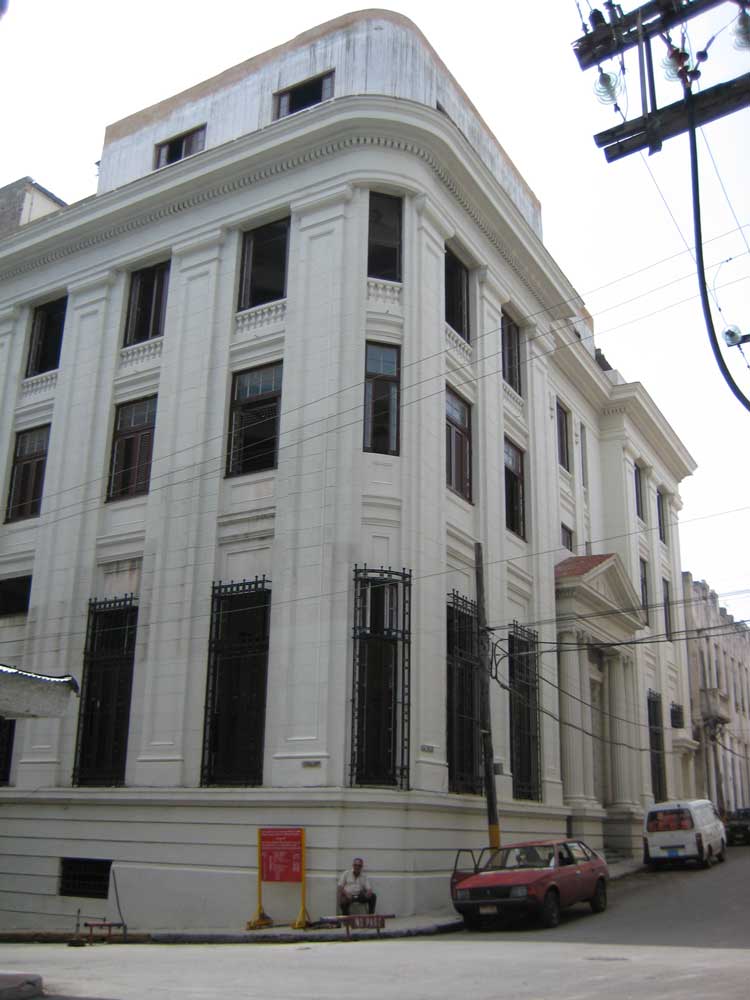
The Casa Matriz of the Quai-d'Orsay brand is now the Partagás factory on Calle San Carlos No. 816.
Here you will find the Quai D'Orsay Manufacture
If the live folder does not work, please click here to visit the Quai D'Orsay Manufacture.
Picture credits
- Claudia Puszkar
- Antoine Bathie: “The Habano a la Francaise”, Belgium 2019, ISSN: 1254-6798
- Painting: Eugène Galien-Laloue, Wikipedia
Curated for you
External website: Experience the Habanos Club in Germany
At Origin Of Cigar: VIP LETTER from Origin Of Cigar: A curated email celebrating the fine pleasures of Cuban cigar culture.
Historical Habanos manufactories documentary film
In this film, their stories - and their true faces - are uncompromisingly revealed. This is far more than just a documentary film - it is a journey into the soul of Cuba.

What is in your drawers?
Some chapters in the history of cigars still lie in hidden in drawers, archives or private collections. Do you own Records, documents or references to Cuban cigar brands? Or do you know Sources, that could help with historical research? Then please send us an e-mail. Claudia Puszkar will contact you personally and discuss everything else with you. Together we can Bringing buried stories back to light. 👉 admin@origin-of-cigar.com
New to Cuban cigars? Or deep into it?
FAQ - Read the frequently asked questions
Open the glossary of Cuban cigars
Who is behind Origin Of Cigar?
Who we are and how you can reach us → Please click here
Quai D'Orsay Photo Gallery
If you do not see the photo gallery, please click here for the Quai D'Orsay photo gallery
References
- Min Ron Nee:
- “AN ILLUSTRATED ENCYCLOPAEDIA OF POST-REVOLUTION HAVANA CIGARS” / Hong Kong 2003, ISBN: 978-3980930826
- Instituto de Investigaciones del Tabaco Cuba:
- „The world of Habanos“ / Havana 2013, ISBN: 978-959-7212-08-9
- Adriano Martínez Rius:
- “Habano the King” / Barcelona 1998, ISBN: 84-930387-1-7
- Adriano Martinez Rius:
- “The Great Habano Factories” / Barcelona 2005, ISBN: 84-609-4024-1
- Orlando Quiroga:
- “El Habano al rojo vivo” / Havana 2002
- Enzo A. Infante:
- “Havana Cigars 1817-1960” / Neptune City 1997
- Eumelio Espino:
- “El Habano - De la semilla al puro en 539 pasos” / Madrid 2019, ISBN: 978-84-09-07091-6
- Alexander Groom:
- “El Habano Moderno” / Helios House Press 2022, ISBN: 978-911683-05-6
You are here:


 Deutsch
  Español
  English (UK)
  Français
  Italiano