
Quintero Cigars: Habanos from Cienfuegos

Quintero cigars are among the few Habanos brands whose origins lie not in Havana, but in Cienfuegos.
Where do cigars come from?
Table of contents
What are Quintero cigars?
Quintero cigars are a Cuban cigar brand dating back to the 1920s, originally founded in Cienfuegos. Agustin Quintero opened a cigar factory there in 1924 and began producing the brand. Official registration took place probably in 1930, or according to other sources, not until 1940.
The brand was closely linked to the Quintero family and tobacco production in Cienfuegos from the very beginning. Its full name was „Quintero y Hno.“, meaning „Quintero and brother“. Although various sources mention a total of four brothers, the labels bear „Quintero y Hno.“ (singular).
The product range was considerably more extensive before the Cuban Revolution than it is today. It included both handmade and machine-made cigars.
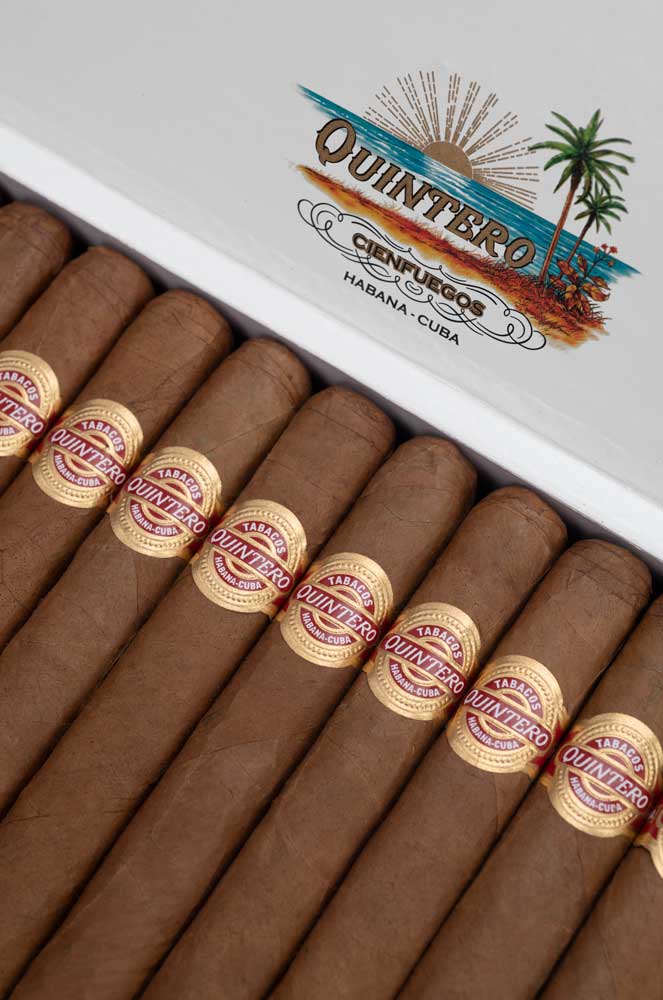
The Quintero Londres Extra, one of the brand's very original formats, which has existed since before the revolution.
Why are Quintero cigars special?
The special feature of Quintero cigars lies above all in their original place of manufacture. While most well-known Habanos were and are made in Havana, Quintero was created in Cienfuegos on the southern coast of Cuba.
Cienfuegos is frequently referred to as the „Pearl of the South“. The city belongs to the Remedios tobacco region, which extends across large parts of central Cuba. The building at Calle D’Clouet No. 16 in Cienfuegos, where the original factory was located, still exists today.
Agustin Quintero placed special importance on the quality of his cigars. He was considered a tobacco expert and personally selected the tobacco on the plantations according to traditional methods. The resulting quality of his cigars was internationally renowned and particularly highly valued in Spain.
In the factory in Cienfuegos, alongside Quintero, the brands El Cañon Rayado and La Riqueza were also produced. Whilst Quintero was particularly successful on the Spanish market, the other two brands were more strongly focused on the Cuban domestic market.
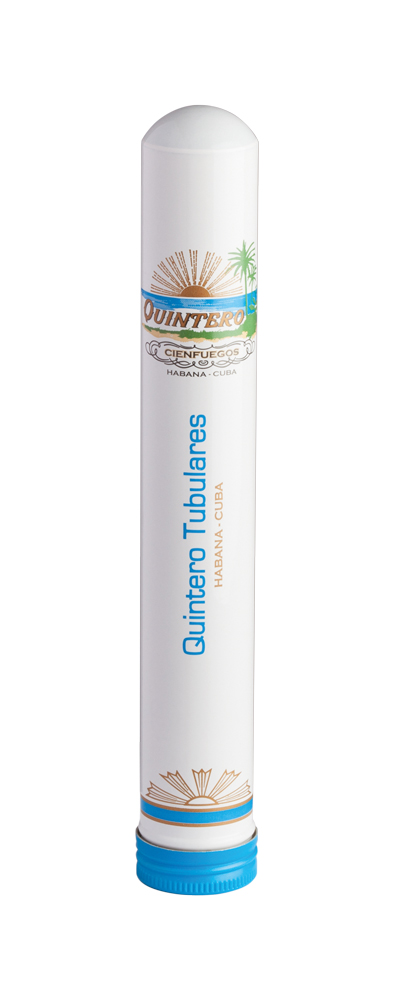
One of the two newer formats of the Quintero brand, the Tubulares, which are available in a tubo.
Classification within the context of the Habanos world
Quintero cigars hold a special position within the world of Habanos because the brand did not originate in Havana. Agustín Quintero himself emphasised the origin of his Habanos from Cienfuegos and was expressly proud of this fact.
There are various statements regarding the origin of the tobacco. The present historical collection describes, on the one hand, tobaccos from Vuelta Abajo and, on the other hand, the personal selection of tobacco leaves from Remedios. After the death of Agustín Quintero, his heirs changed the origin stated on the vitola and described the leaves used as coming exclusively from selected Vueltabajo tobacco of their own choosing.
Despite these changes, the brand remained popular, particularly in Spain. Even the Quintero cigars, which were already machine-made at the time, were said to have an exceptional taste and ageing potential.
The simple logo of the Quintero brand
Brand facts
Introduction: 1924; official registration probably 1930, according to other sources 1940
Founder: Agustin Quintero
Tradition: Quintero family-run business in Cienfuegos
Special feature: Production outside of Havana
Origin of the tobaccos: according to historical records, tobacco from the Remedios region
Original brand name: „Quintero y Hno.“
Former product range: handmade and machine-made cigars
International significance: particularly popular in Spain
Today's concept: handmade cigars with medium filler tobacco
Current range: six different formats
When and how it all began
In 1924, Agustin Quintero opened a cigar factory in Cienfuegos and began manufacturing his cigars there.
It cannot be clearly determined when the brand was officially registered. This likely happened in 1930. Other sources state 1940. Such a later registration is not unusual: the start of cigar production and the legal registration of a brand did not have to happen at the same time. Manufacturers could initially produce and only have a brand protected later once corresponding success became apparent.
In any case, the brand is listed in the official 1940 export register under „Agustin Quintero y Cía.“ in Cienfuegos.
Agustin Quintero and his commitment to quality
Nothing specific is known about the origins of Agustin Quintero's experience in cigar making. However, his high standards for the quality of his cigars are a matter of record.
Agustin Quintero was a tobacco expert and personally selected the tobacco for his cigars on the plantations. The quality of the cigars made from it became internationally known and highly appreciated.
Quintero cigars were particularly successful in Spain. There, the brand developed into a household name and was appreciated for its good value for money.
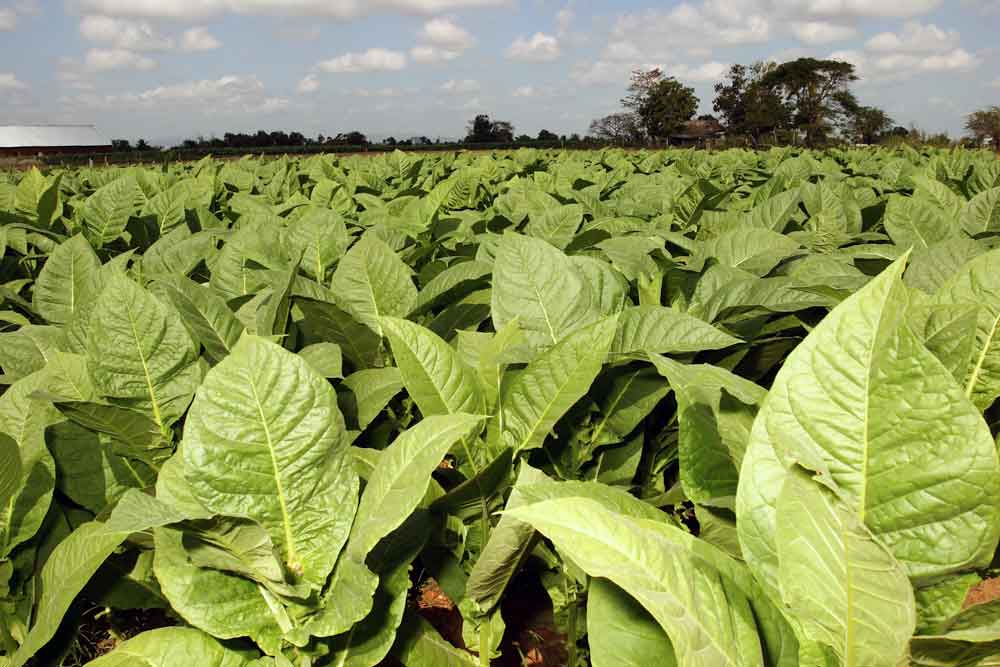
Tobaccos of outstanding quality also come from the Remedios region.
Quintero and the family
Agustin Quintero was not solely responsible for the company. The full brand name „Quintero y Hno.“ stands for „Quintero y Hermano“, meaning „Quintero and Brother“.
Various accounts speak of a total of four brothers. However, this is contradicted by the historical wording on the labels. There you find „Quintero y Hno.“ rather than „Quintero y Hnos.“, meaning the singular and not the plural of „brother“.
It cannot be clearly determined from the available information what role the individual family members played in the company.
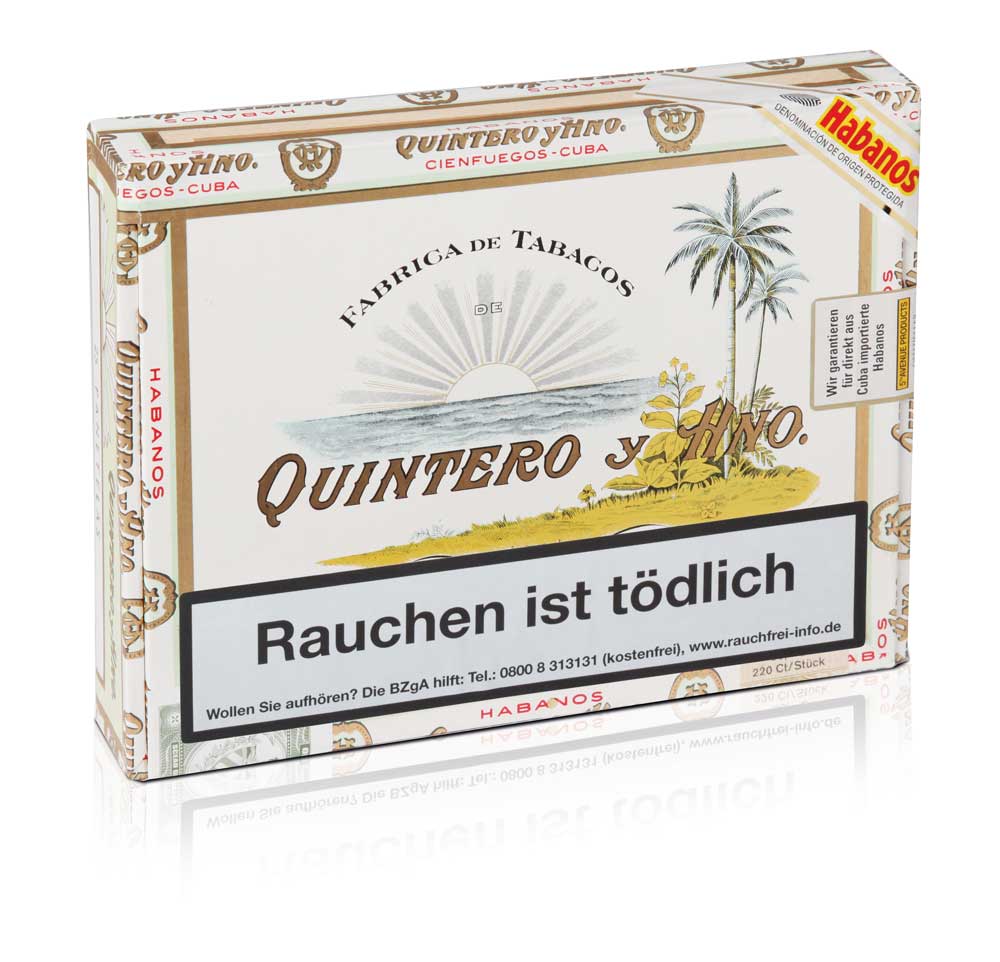
The original company name is still printed on the Quintero box today: „Quintero y Hmo.“ Hmo. is the abbreviation for Hermano = brother.
Cienfuegos – the Pearl of the South
Cienfuegos is centrally located on the southern coast of the island of Cuba and is frequently referred to as the „Pearl of the South“. The city is situated on the Bay of Cienfuegos (Bahía de Cienfuegos) and is therefore very close to the coastline of the Caribbean Sea.
The city belongs to the Remedios tobacco-growing region, which essentially extends across the entire middle of the island. For the history of the brand, Cienfuegos is primarily significant because Quintero produced his cigars there.
The original factory building at Calle D’Clouet No. 16 still exists today.
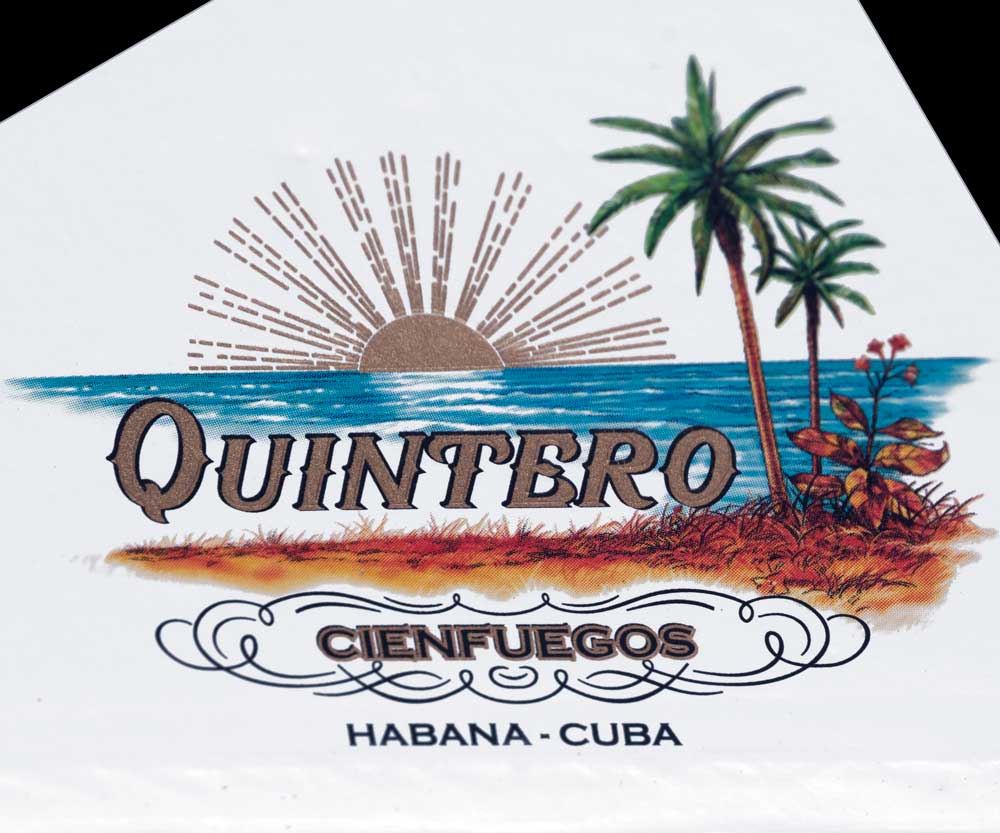
The new look of Quintero cigars emphasises their proximity to the sea with water and the setting sun on the horizon. Cienfuegos is situated on the Bay of Cienfuegos on the southern coast of Cuba.
Where does the tobacco come from?
According to traditional accounts, Agustín Quintero personally selected his tobacco leaves in the fields of Remedios and subsequently had the cigars manufactured in his factory in Cienfuegos.
At the same time, the brand is associated with tobaccos from the Vuelta Abajo. Agustin Quintero himself is said to have explicitly emphasised their origin from Cienfuegos: „My Habanos, ‚Quintero y Hno.‘, are from Cienfuegos and I am proud of it!“
Excellent tobacco was and still is grown in the region around Cienfuegos and Remedios respectively. According to this account, the decisive factor was the selection of the tobaccos from which, given the appropriate quality, the best cigars could be made.
The Death of Agustin Quintero and the Changes That Resulted From It
There is no reliable information regarding the exact timing, the individuals involved, and the specific form in which the business was continued after the death of Agustin Quintero. It is also unclear whether the company continued to be run entirely as a family business.
The heirs evidently considered the fact that the tobaccos came from Remedios and not from Pinar del Rio, and that the cigars were produced in Cienfuegos and not in Havana, to be a flaw. Although Cienfuegos continued to be stated as the location of the factory, they changed the indication of origin on the lithograph.
Beneath the picture of the lady in red now stood: „ELABORADOS EXKLUSIVAMENTE CON RAMA DE VUELTA ABAJO DE ESCOGIDA PROPIA“. This indicated that the cigars were made exclusively from selected Vueltabajo tobacco of their own choosing.
Despite these changes, Quintero cigars remained popular and sought-after, particularly in Spain. The machine-made cigars were also appreciated for their flavour and were even credited with ageing potential.
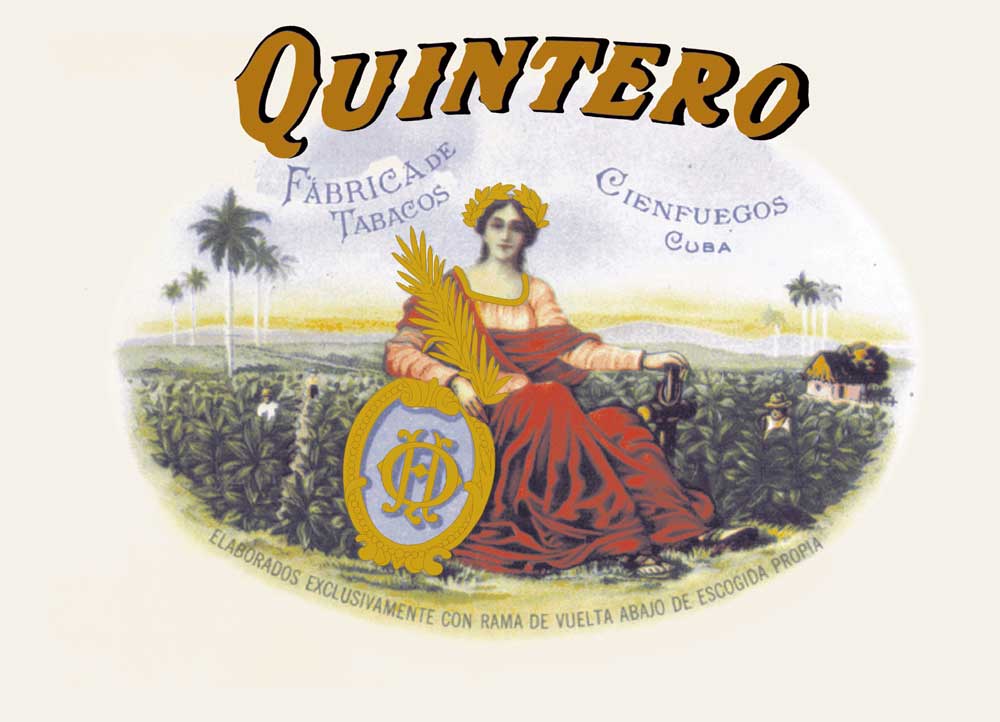
A lady draped in red cloth, with an extensive tobacco field in the background: the vitola of the Quintero brand.
Quintero cigars after the revolution
Following the Cuban Revolution, production passed into state hands. By the end of the 1970s, the brand's portfolio became increasingly smaller.
The product range continued to include both hand-made and machine-made cigars.
The handmade formats included Brevas, Churchills, Coronas, Coronas Selectas, Media Coronas and Media Coronas Selectas.
In the early 1980s, the Brevas were also machine-made. In the late 1980s or early 1990s, the production of almost all handmade Quintero cigars was switched to machines.
For a few years now, Quintero cigars have once again been made entirely by hand.
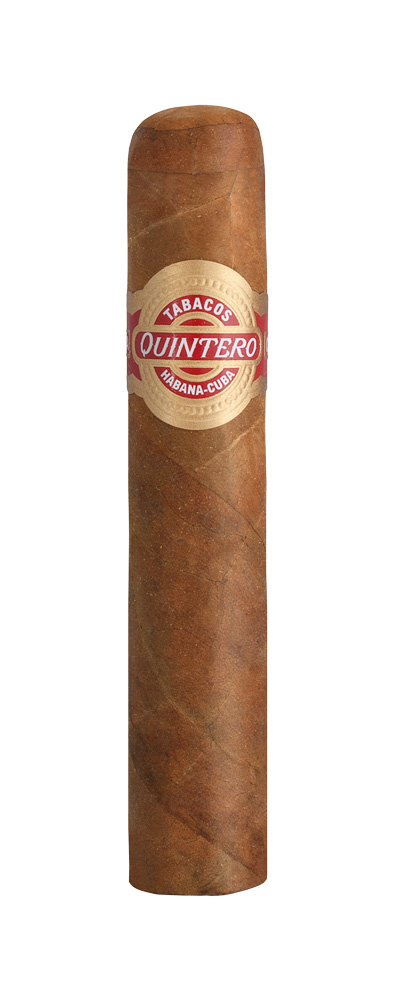
The Quintero Favoritos, one of the brand's current formats.
Quintero cigars today
Today's range comprises six different formats. The cigars are made by hand, but feature a filler made from so-called medium-filler tobaccos.
Here, the filler consists of larger pieces of leaf rather than whole halves of leaves. It thus differs from a traditional longfiller, in which whole tobacco leaves or corresponding parts of leaves are used.
At the same time, they are not classic short-fillers, where the filler consists merely of small leaf scraps. The filler is therefore referred to as a medium-filler.
In Spanish terminology, the filler is referred to as „tripa corta“. The term is derived from „cortar“, which means „to cut“.

For a few years now, the packaging of Quintero cigars has featured a fresh and invigorating light blue and white colour scheme.
To the point
Quintero cigars combine around a century of brand tradition with an unusual origin: the brand was founded in Cienfuegos, making it one of the few well-known Habanos brands not manufactured in Havana. Today, handmade Quintero cigars with a mixed filler blend are at the heart of the range.
Here you will find the Quintero factory
If the live folder does not work, please click here for the Quintero factory.
Picture credits
- Claudia Puszkar
- Habanos S.A.
Curated for you
External website: Experience the Habanos Club in Germany
At Origin Of Cigar: THE PLEASURE LETTER by Origin Of Cigar: A curated email celebrating the fine pleasures of Cuban cigar culture.
Historical Habanos manufactories documentary film
In this film, their stories - and their true faces - are uncompromisingly revealed. This is far more than just a documentary film - it is a journey into the soul of Cuba.

What is in your drawers?
Some chapters in the history of cigars still lie in hidden in drawers, archives or private collections. Do you own Records, documents or references to Cuban cigar brands? Or do you know Sources, that could help with historical research? Then please send us an e-mail. Claudia Puszkar will contact you personally and discuss everything else with you. Together we can Bringing buried stories back to light. 👉 admin@origin-of-cigar.com
New to Cuban cigars? Or deep into it?
FAQ - Read the frequently asked questions
Open the glossary of Cuban cigars
Who is behind Origin Of Cigar?
Who we are and how you can reach us → Please click here
Quintero Photo Gallery
If you do not see the photo gallery, Please click here for the Quintero photo gallery
References
- Min Ron Nee:
- “AN ILLUSTRATED ENCYCLOPAEDIA OF POST-REVOLUTION HAVANA CIGARS” / Hong Kong 2003, ISBN: 978-3980930826
- Instituto de Investigaciones del Tabaco Cuba:
- „The world of Habanos“ / Havana 2013, ISBN: 978-959-7212-08-9
- Adriano Martínez Rius:
- “Habano the King” / Barcelona 1998, ISBN: 84-930387-1-7
- Adriano Martinez Rius:
- “The Great Habano Factories” / Barcelona 2005, ISBN: 84-609-4024-1
- Orlando Quiroga:
- “El Habano al rojo vivo” / Havana 2002
- Enzo A. Infante:
- “Havana Cigars 1817-1960” / Neptune City 1997
- Eumelio Espino:
- “El Habano - De la semilla al puro en 539 pasos” / Madrid 2019, ISBN: 978-84-09-07091-6
- Alexander Groom:
- “El Habano Moderno” / Helios House Press 2022, ISBN: 978-911683-05-6
You are here:


 Deutsch
  Español
  English (UK)
  Français