
Cuba History Part 5: Powerful: American Trust, British & Americans bundle brand power - the first half of the 20th century


American Trust in Havana, Cuba. This is part 5 of the series History Cuba, which shows the influence of British and American investors on Cuba's cigar industry in the early 20th century.
The long war of independence weakened Cuba economically; factories lay idle, torcedores migrated to the USA; there was a lack of raw materials. In this situation, British and American investors stepped in and bought factories, brands, plantations and drying houses - and with them significant parts of the Cuban tobacco industry.
Series „History Cuba“ - A 6-part documentary journey through the history of Habanos. 👉To the complete overview of the series.
Table of contents part 5
British consortia led by Gustav Bock and Segundo Alvarez
The co-founder of the Havana Cigar & Tobacco Factory, Gustav Bock, led a consortium that was primarily backed by British investors. They acquired the La Corona brand and factory with Segundo Alvarez at the helm (with 18 cigar and 3 cigarette brands) as well as La Rosa de Santiago, La Flor de Naves and La Legitimidad - including trademark rights to over 30 brands. Segundo Alvarez and Gustav Bock massively changed the market landscape in Cuba in operational terms. They were like scouts on the ground.
The American approach
US companies bought factories and Vegas in parallel - not only for production in Havana, but also as a source of raw materials for Key West, Tampa, New York, Philadelphia and New Orleans. One of the first and most important companies was the Havana Commercial Co., known as the American Trust (main shareholder Collins; locally managed by Francisco García). Under his leadership, the trust bought twelve important factories, held 149 cigar and 36 cigarette brand rights and took over Hija de Cabañas y Carbajal - as of 1903, more than half of the Habano brands were in its hands.
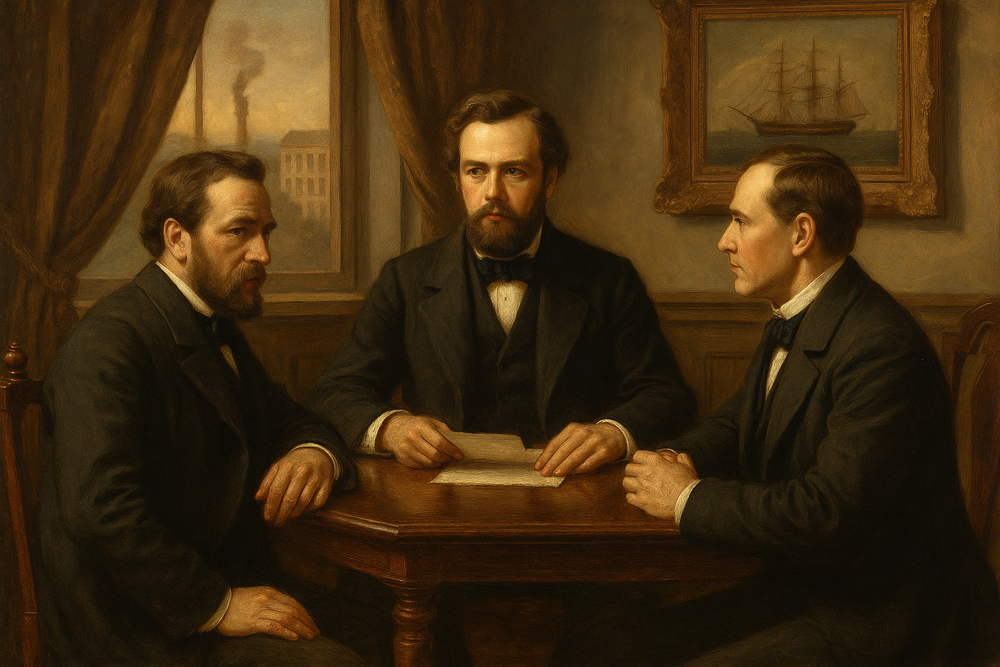
Highlight of the concentration: La Corona 1904 in the „Palacio de Hierro“
In 1904, the new La Corona factory was built next to the presidential palace (now the Revolution Museum) - Cuba's first steel construction, built by a New York company for around one million pesos; around 900 employees, including 420 torcedores, produced around 8 million cigars a year. The workers called the factory the „Mausoleum“: because so many brands were buried there.
Balance sheet around 1910
Within a few years, large parts of the industry passed into foreign hands; in 1910 there were still around 70 independent factories (e.g. Por Larrañaga, Partagás, Romeo y Julieta, El Rey del Mundo, H.Upmann and other lesser-known names today).
After brief upswings at the beginning of the 20th century, wars and crises hit the industry hard. The „Golden Twenties“ - also known as the „dance of the millions“ or „fat cows period“ - brought speculation, quick profits and spectacular losses:
The Upmann family had to give up their business: as a German company, they were blacklisted and had to sell the cigar factory to Frankau S.A. in 1922; many other brands also changed hands: the founders of the brands were now of an advanced age.
With the global economic crisis, the mood deteriorated massively; more and more brands and factories were concentrated in fewer and fewer hands.
Machine-made cigars vs. craft
The introduction of machine-made cigars - particularly in the USA - flooded the world market with cheap goods. Cuba stuck to its course: hand-rolled premium cigars for a knowledgeable, affluent public. This increased the pressure to visibly protect quality and clearly label the origin.
1927: Protection commission for Cuban tobacco
In 1927, a commission was set up to protect Cuban tobacco. The reason: the USA levied very high customs duties on cigars imported into the USA. Importing tobacco was much cheaper. As a result, large quantities were brought from Cuba to the USA, where the cigars were rolled.
The aim of the commission was to protect tobacco originating from Cuba and the cigars actually produced in Havana - to ensure the quality and originality of the Habano. Among other things, it was enforced that cigars not produced in Cuba had to be labelled as non-Cuban; there were still violations, but the principle was established.
Post-war, embargo, new structures
After the Second World War, the market stabilised temporarily (among other things, the US government ordered Habanos as a gift for troops stationed in Germany). In the 1950s, the concentration of capital increased: Fewer than 100 foreign companies were active; the number of independent factories fell from ~ 70 (1910) to ~ 20.
But then there was another boom. In the 1950s, there were hundreds of small and large cigar manufacturers in Havana and the surrounding area trying their luck in the business. The Cuban cigar was a much sought-after product.
Outlook
Concentration of brands and capital: The American Trust Havana stands for a phase in which international investors reorganised the industry - and prestige buildings such as La Corona set standards. In difficult times, many manufacturers struggled to survive or gave up. But as soon as times got better, after the Second World War, business picked up again.
Continue in the series „History Cuba“
This was part 5 of the series „History Cuba“. → Back to Part 4: Troubled times and guarantee seals → Continue to Part 6: Revolution and nationalisation → To the complete overview
Picture credits
- Cover elements: ChatGPT
- Image in text: ChatGPT
Curated for you
External website: Habanos Club Germany
At Origin Of Cigar: Fancy even more history about Cuba cigars?
Historical Habanos manufactories documentary film
In this film, their stories - and their true faces - are uncompromisingly revealed. This is far more than just a documentary film - it is a journey into the soul of Cuba.

What is in your drawers?
Some chapters in the history of cigars still lie in hidden in drawers, archives or private collections. Do you own Records, documents or references to Cuban cigar brands? Or do you know Sources, that could help with historical research? Then please send us an e-mail. Claudia Puszkar will contact you personally and discuss everything else with you. Together we can Bringing buried stories back to light. 👉 admin@origin-of-cigar.com
New to Cuban cigars? Or deep into it?
FAQ - Read the frequently asked questions
Open the glossary of Cuban cigars
Who is behind Origin Of Cigar?
Who we are and how you can reach us → Please click here
General references
- Min Ron Nee:
- “AN ILLUSTRATED ENCYCLOPAEDIA OF POST-REVOLUTION HAVANA CIGARS” / Hong Kong 2003, ISBN: 978-3980930826
- Instituto de Investigaciones del Tabaco Cuba:
- „The world of Habanos“ / Havana 2013, ISBN: 978-959-7212-08-9
- Adriano Martínez Rius:
- “Habano the King” / Barcelona 1998, ISBN: 84-930387-1-7
- Adriano Martinez Rius:
- “The Great Habano Factories” / Barcelona 2005, ISBN: 84-609-4024-1
- Orlando Quiroga:
- “El Habano al rojo vivo” / Havana 2002
- Enzo A. Infante:
- “Havana Cigars 1817-1960” / Neptune City 1997
- Eumelio Espino:
- “El Habano - De la semilla al puro en 539 pasos” / Madrid 2019, ISBN: 978-84-09-07091-6
- Alexander Groom:
- “El Habano Moderno” / Helios House Press 2022, ISBN: 978-911683-05-6
You are here:


 Deutsch
  Español
  English (UK)
  Français