
Fonseca history - Timeless elegance of a Cuban legend


The Fonseca story stands for the fusion of style, luxury and tradition. Francisco E. Fonseca came to Cuba at the end of the 19th century - and created a legend with his brand that still stands for elegance and sophistication today.
Where do cigars come from?
Table of contents
The beginnings of the Fonseca story
The Fonseca story begins modestly. At a time of political unrest and economic upheaval, Fonseca ventured into cigar production. Around 1891, he started out in a small house in Calle Dragones No. 39 in Havana. He later moved to Calle Gervasio No. 128, perhaps running both workshops in parallel - a symbol of his unwavering determination to realise his dream.

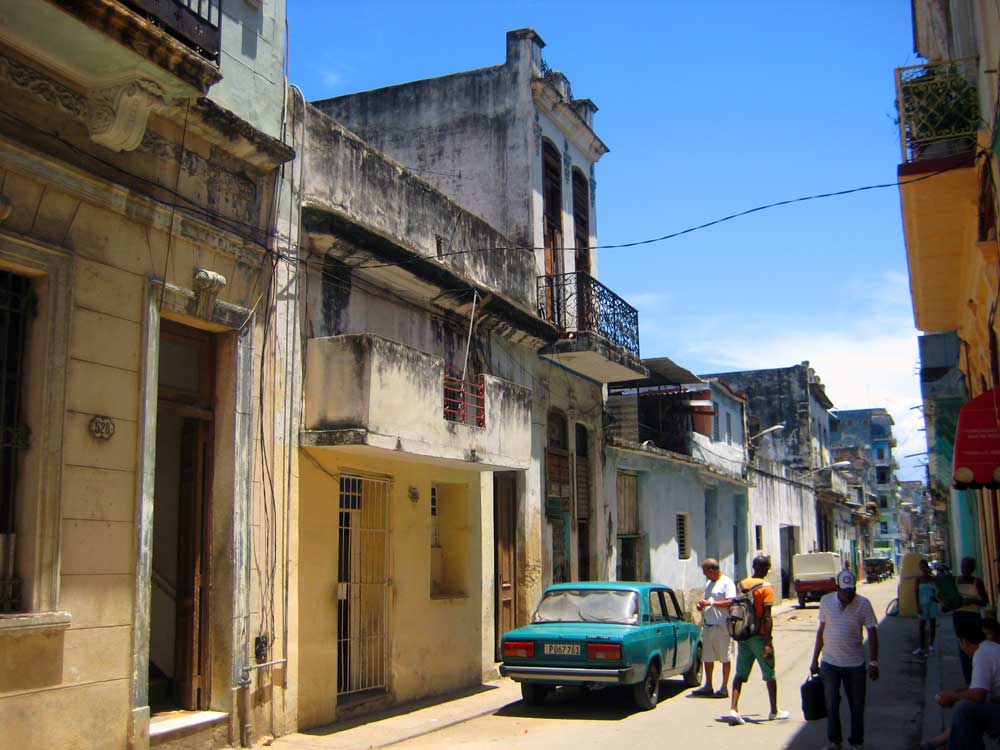
Fonseca had its first company headquarters at Calle Dragones No. 39. Here is a view of the street; the first factory could have been in this house.
Fonseca story: perseverance and success
Fonseca officially registered his brand in 1907. By the time he moved into the factory at Calle Galiano No. 102 in 1915, he had long since made a name for himself. The Fonseca story is characterised by the highest quality standards. Fonseca engaged Señor Mecallin, one of Havana's best cigar rollers. He attached great importance to the finest tobaccos, flawless workmanship and an aesthetic appearance that radiated luxury.

The Fonseca factory on Calle Galiano No.466 (formerly No.102). The factory was located in this house, which is still beautiful today.
Elegance as the hallmark of the Fonseca story
The Fonseca brand reflected its founder: elegant, cultivated, stylish. Francisco E. Fonseca was known for his impeccable clothing and his golden walking stick - symbols of an era in which style still meant character. 60 per cent of his cigars were made for receptions, banquets and prestigious occasions.
The Fonseca story is inextricably linked to one detail: Each cigar was wrapped in the finest Japanese tissue paper - a sign of sophistication and protection. This presentation made the cigars unmistakable. Fonseca also had aluminium tubes made, which are regarded as the forerunners of modern tubos.

Unfortunately, the inscription on the gable of the former Fonseca factory is no longer preserved or legible. „Flor de Fonseca. Fabrica de Tabacos“ was the inscription.
The manufactory in Calle Galiano
The Fonseca story takes us into a house full of history: seven round archways, colourful walls, a pediment with the inscription „Flor de Fonseca - Fábrica de Tabacos“. Inside was a luxurious smoking parlour where Fonseca himself received cigar lovers. There, they tasted new blends, discussed flavours and helped to shape the brand's profile - a living example of Cuban craftsmanship.

Calle Galiano (or Avenida de Italia) is a very busy street that leads directly to the Malecon. The Fonseca factory is located here on the right-hand side of the street, recognisable by its round gable.
La Cabeza Rubia - the face of the Fonseca story
Even today, Francisco E. Fonseca's portrait adorns every cigar box. The „blond head of Fonseca“, La Cabeza Rubia, was sung about by Federico García Lorca in „Son de Santiago de Cuba“. For Lorca, the image - together with the scene from „Romeo y Julieta“ - symbolised the soul of Cuba. As a result, the Fonseca story also became part of Spanish literary culture.

La Cabeza Rubia: Francisco E. Fonseca, the founder of the Fonseca brand, always well-dressed and elegant. Top quality cigars too.
Fonseca history and patronage
An often overlooked aspect of the Fonseca story is Fonseca's commitment to art and culture. He gathered musicians, painters and writers in his house in Barrio Cerro. Over wine, olives and pata negra, he created an atmosphere of creative freedom. He discreetly provided a wooden box with money - anyone in need was allowed to help themselves. This generosity made him a silent benefactor of Havana.

One of the doorposts to the entrance of the former Fonseca factory on Calle Galiano No.466 (formerly No.102).
Fonseca history - continuity and legacy
Fonseca died in 1930, but his widow Teresa Boetticher continued to run the factory. The factory remained in operation until it was nationalised in 1960. Even today, there are many reminders of the original Fonseca story: the Cosacos, Delicias, Fonseca No. 1 and Cadetes cigars are still wrapped in the finest paper - a tribute to the founder and his understanding of luxury.

Fonseca - the name stands for cigars of the highest quality. This was always the aim of the company founder and is still realised today.
The Fonseca story is a symbol of style, quality and Cuban tradition - a story that lives on to this day.
Here you will find the Fonseca Manufactory (outside Havana in the province)
If the live folder does not work, please click here for the Fonseca Manufaktur.
Picture credits
- Claudia Puszkar
- Habanos S.A.
Curated for you
External website: Find Fonseca cigars
At Origin Of Cigar: Experience history with the VIP LETTER
Historical Habanos manufactories documentary film
In this film, their stories - and their true faces - are uncompromisingly revealed. This is far more than just a documentary film - it is a journey into the soul of Cuba.

What is in your drawers?
Some chapters in the history of cigars still lie in hidden in drawers, archives or private collections. Do you own Records, documents or references to Cuban cigar brands? Or do you know Sources, that could help with historical research? Then please send us an e-mail. Claudia Puszkar will contact you personally and discuss everything else with you. Together we can Bringing buried stories back to light. 👉 admin@origin-of-cigar.com
New to Cuban cigars? Or deep into it?
FAQ - Read the frequently asked questions
Open the glossary of Cuban cigars
Who is behind Origin Of Cigar?
Who we are and how you can reach us → Please click here
Fonseca History Photo Gallery
If you do not see the photo gallery, please click here for the Fonseca history photo gallery




References
- Min Ron Nee:
- “AN ILLUSTRATED ENCYCLOPAEDIA OF POST-REVOLUTION HAVANA CIGARS” / Hong Kong 2003, ISBN: 978-3980930826
- Instituto de Investigaciones del Tabaco Cuba:
- „The world of Habanos“ / Havana 2013, ISBN: 978-959-7212-08-9
- Adriano Martínez Rius:
- “Habano the King” / Barcelona 1998, ISBN: 84-930387-1-7
- Adriano Martinez Rius:
- “The Great Habano Factories” / Barcelona 2005, ISBN: 84-609-4024-1
- Orlando Quiroga:
- “El Habano al rojo vivo” / Havana 2002
- Enzo A. Infante:
- “Havana Cigars 1817-1960” / Neptune City 1997
- Eumelio Espino:
- “El Habano - De la semilla al puro en 539 pasos” / Madrid 2019, ISBN: 978-84-09-07091-6
- Alexander Groom:
- “El Habano Moderno” / Helios House Press 2022, ISBN: 978-911683-05-6
You are here:


 Deutsch
  Español
  English (UK)
  Français
  Italiano