
Cuba History Part 2: Spanish colonial rule - everything under strict control


Spanish colonial rule in Cuba. This is part 2 of the series History Cuba, which sheds light on the development of the tobacco industry under Spanish colonial rule and the birth of the chinchales.
Havana is the cradle of the famous Habanos. Although the best tobaccos come from first-class Vegas in the Pinar del Rio region, the best cigars in the world have always been rolled in the heart of Havana - in a city that was founded in 1519 and has been the capital since 1607.
Series „History Cuba“ - A 6-part documentary journey through the history of Habanos. 👉To the complete overview of the series.
Where do cigars come from?
Table of contents part 2
Spanish colonial rule
For centuries, the island was under Spanish colonial rule; the tobacco monopoly was firmly in the hands of the Real Factoría, an institution that controlled the production of tobacco until it was exported. The Spanish system even controlled trade via Spanish harbours and levied high taxes.
Snuff and chewing tobacco were in demand in Europe; all Cuban tobacco went into its production; cigars were not officially produced in Cuba at all, and only in small, strictly limited quantities.
In Cuba, on the other hand, the smoked tobacco poultice was regarded as the original form of enjoyment.
1762/63: Eleven months that changed everything
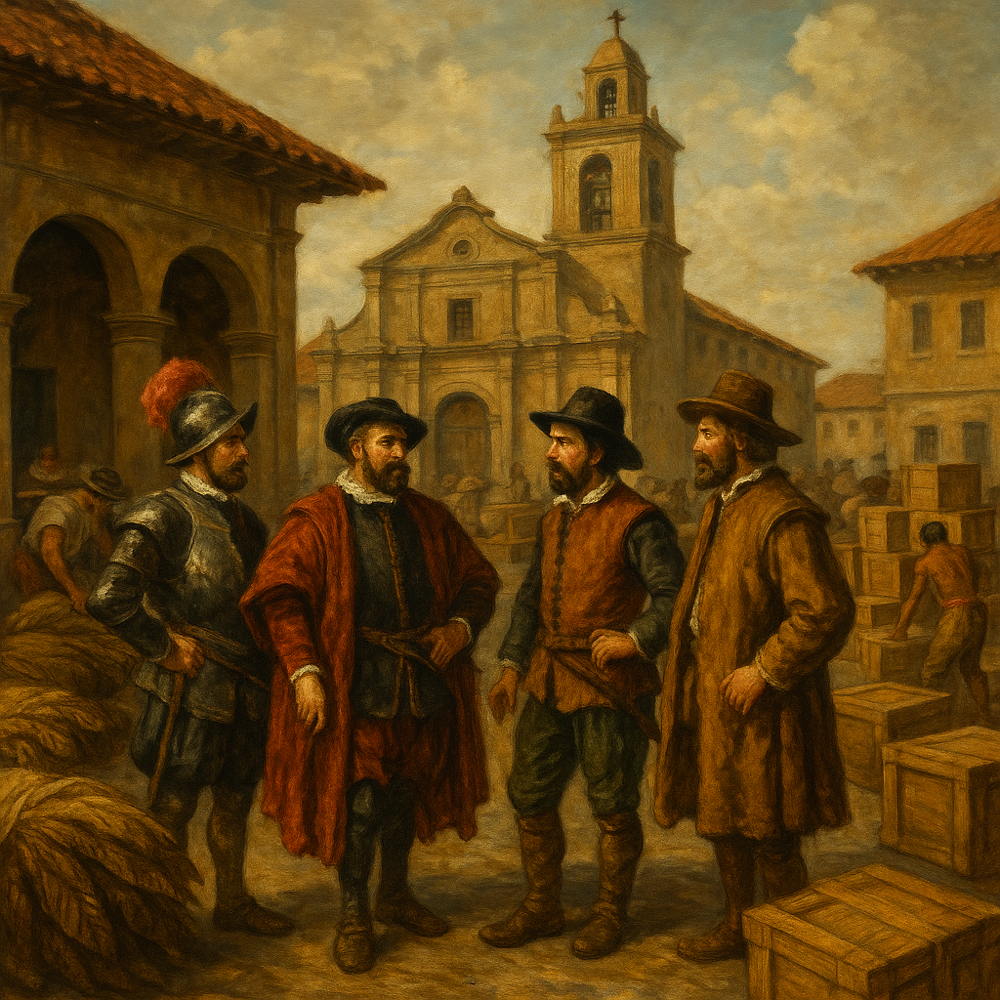
During the Seven Years' War, Great Britain conquered Havana in 1762 and occupied the city for eleven months. During this phase of short-term free trade, the power of the Real Factoría was significantly weakened - and the Creole citizens experienced how profitable trade could be without the Spanish shackles.
The British occupation suddenly allowed anyone to make cigars: the birth of the chinchales, small, often domestic family workshops with one or two rollers. At first they produced for local consumption, but soon they began to co-operate with traders and merchants from Great Britain, Germany, North America and other countries - a boom began. In just a few months, the Cuban cigar, now known as Habano, became a well-known and sought-after product all over the world.
After eleven months, Cuba fell back to Spain in the Peace of Paris.
Back under the gun - and yet something is on the move
With the return of Spain, the Real Factoría almost regained its former power. In order to protect sales of snuff and chewing tobacco, it limited the quantities of tobacco for cigars. At the same time, the crown founded a large cigar factory, recruited labour through welfare (many white women worked for little pay) and filled vacancies with slaves.
Production flourished from 1799; a second factory was added in 1802; more than 100,000 kg of tobacco were processed - all of the cigars went to Spain.
Why the Chinchales rolled on
At the same time, the chinchales flourished: some employees of the Real Factoría ran their own chinchal on the side; the administration could not buy all the tobacco from the vegueros; not all the cigars could be sold in Spain.
In addition, the European wars from 1792 onwards made trade more difficult. The first trade marks were registered as early as 1810 - for example by Francisco Cabañas; the Catalan Bernadino Rencurrel also registered a trade mark. In this way, small workshops grew into a significant small industry - and a real competitor for the Real Factoría.
1817: The end of the monopoly
Don Francisco de Arango y Parreño demanded reforms in 1812, including the dissolution of the monopoly. After the return of Ferdinand VII, the Spanish tobacco monopoly in Cuba was actually abolished in 1817. The king emphasised that only free trade between Europeans, Americans and Spaniards could promote development; at the same time, the cultivation of the excellent Cuban tobacco should increase.
This was followed by an incredible boom: in 1840 there were 306 factories in Havana; in 1855 exports reached 356.5 million cigars.
Outlook
From colonial monopoly to free market: Cuba's cigar production laid the foundations for its global reputation in just a few decades - fuelled by chinchales, the first brands and growing demand. Next part: from the tiny chinchales to the big palaces.
Continue in the series „History Cuba“
This was part 2 of the series „History Cuba“. → Back to Part 1: Columbus & the origin of tobacco → Continue to Part 3: Colonial rule and Chinchales → To the complete overview
Picture credits
- Cover elements: ChatGPT
- Image in text: ChatGPT
Curated for you
External website: Habanos Club Germany
At Origin Of Cigar: Fancy even more history about Cuba cigars?
Historical Habanos manufactories documentary film
In this film, their stories - and their true faces - are uncompromisingly revealed. This is far more than just a documentary film - it is a journey into the soul of Cuba.

What is in your drawers?
Some chapters in the history of cigars still lie in hidden in drawers, archives or private collections. Do you own Records, documents or references to Cuban cigar brands? Or do you know Sources, that could help with historical research? Then please send us an e-mail. Claudia Puszkar will contact you personally and discuss everything else with you. Together we can Bringing buried stories back to light. 👉 admin@origin-of-cigar.com
New to Cuban cigars? Or deep into it?
FAQ - Read the frequently asked questions
Open the glossary of Cuban cigars
Who is behind Origin Of Cigar?
Who we are and how you can reach us → Please click here
General references
- Min Ron Nee:
- “AN ILLUSTRATED ENCYCLOPAEDIA OF POST-REVOLUTION HAVANA CIGARS” / Hong Kong 2003, ISBN: 978-3980930826
- Instituto de Investigaciones del Tabaco Cuba:
- „The world of Habanos“ / Havana 2013, ISBN: 978-959-7212-08-9
- Adriano Martínez Rius:
- “Habano the King” / Barcelona 1998, ISBN: 84-930387-1-7
- Adriano Martinez Rius:
- “The Great Habano Factories” / Barcelona 2005, ISBN: 84-609-4024-1
- Orlando Quiroga:
- “El Habano al rojo vivo” / Havana 2002
- Enzo A. Infante:
- “Havana Cigars 1817-1960” / Neptune City 1997
- Eumelio Espino:
- “El Habano - De la semilla al puro en 539 pasos” / Madrid 2019, ISBN: 978-84-09-07091-6
- Alexander Groom:
- “El Habano Moderno” / Helios House Press 2022, ISBN: 978-911683-05-6
You are here:


 Deutsch
  Español
  English (UK)
  Français
  Italiano