
Cuba History Part 6: Revolution and nationalisation - the second half of the 20th century


Revolution! This is part 6 of the series History Cuba, the revolution, nationalisation, the US embargo and the creation of Cubatabaco and Habanos S.A.
The Republic of Cuba had been independent on paper since 1902. However, the Cubans had gained independence from the Spanish, but had only exchanged it for another dependency - that of the USA. Many people were dissatisfied with this.
Series „History Cuba“ - A 6-part documentary journey through the history of Habanos. 👉To the complete overview of the series.
Where do cigars come from?
Table of contents part 6
Resistance against Fulgencio Batista
Resistance formed primarily against President Fulgencio Batista, who had seized power through the military. Fidel Castro was part of a group of insurgents who fought against him as early as 1952. Although the legendary attack on the Moncada barracks failed, the rebels, later known as the «Heroes of Moncada», including Fidel Castro, became heroes.
Revolution in Cuba
After the resistance had formed abroad, then with the participation of Che Guevara, the rebels landed in the province of Granma in 1956; a two-year guerrilla war in the Sierra Maestra began. The rebels not only received support from the inhabitants of the region. Cells also formed in the cities. The Batista army was unable to defeat the rebels. Castro and his supporters were reported in the world press with great publicity, a masterstroke.
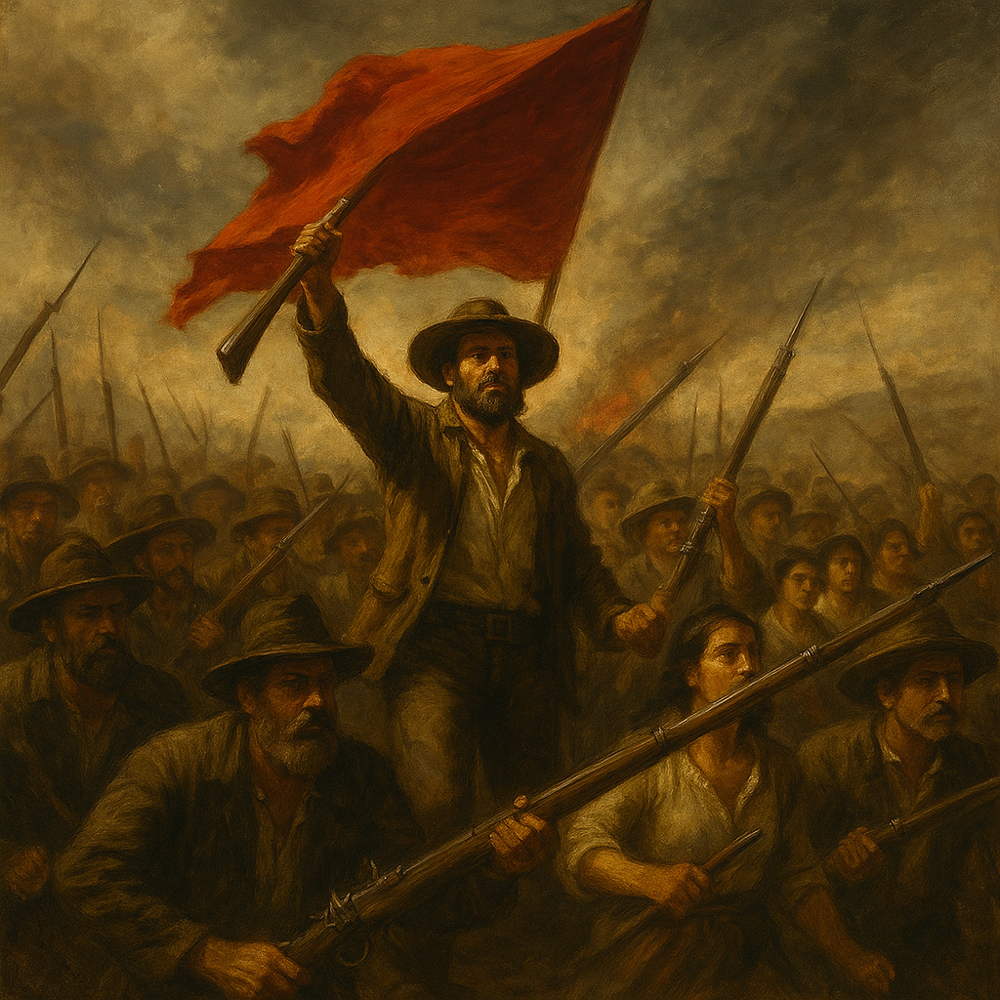
The victory of the revolution
The rebels achieved several military successes, which led to Batista's escape. The victory of the revolution could thus be proclaimed.
There was a complete reorganisation of society and the economy. All businesses, including the cigar factories, were nationalised from 1960. The owners left the island. The state, in the form of the „Empresa Cubana del Tabaco“, or Cubatabaco, took over the management of the factories. However, the tobacco plantations remained, as the only ones, in private ownership until today.
Cohiba and the battle in the Sierra Maestra“
Fidel Castro was always travelling with cigars in the Sierra Maestra. He was always a great cigar lover. After the victory of the revolution, he had a lot to do, but he still remained loyal to cigars.
And just as his guerrilla army in the Sierra Maestra became a legend, so did the cigar that is now world-famous and one of the most sought-after Habanos in the world - the Cohiba.
One day, Fidel Castro was offered a cigar by his bodyguard. Fidel Castro liked it so much that he asked him to make more. This gave rise to the idea of creating a completely new brand. Today, the Cohiba is probably the most famous cigar in the world.
Production continues
Production in the cigar factories continued uninterrupted. Although the owners were no longer there, many of the torcedores and workers in the factories were, with all their experience.
The US embargo in 1963 cut off the most important sales market. It is said that President Kennedy had another delivery of his favourite cigars, the H.Upmann Petit Corona, sent to him before the embargo was announced.
Production was centralised under Cubatabaco; since 1994 Habanos S.A. has been responsible for marketing and sales; since 2001 Tabacuba S.A. has controlled the entire production process.
Further consolidation
Over the past decades, many of the old factories have been closed. It was often renovation work that made relocation necessary. Today, cigar production is concentrated in a few large factories in Havana. These include the La Corona, Partagás, H.Upmann and Romeo y Julieta factories. Some factories are also located in the province. Each brand has its Casa Matriz, its headquarters. However, this does not mean that all formats of a brand are produced in exactly this factory. For special formats, for example, the factory that has the best torcedores for that format is selected.
The specifics of each brand
Even today, each brand still has its own specific flavour. This depends on the strength, but also on the flavour, for example. The flavour of one Habano or another has certainly changed over time. However, experienced master blenders try to keep the flavour of a brand special.
Conclusion
Much has changed in Cuba since the victory of the revolution. What has remained unchanged, however, is the speciality of the Cuban cigar, the Habano. It is the origin of the tobacco and the resulting special flavour that distinguishes Cuban cigars from others. The preservation of craftsmanship as the core of the Cuban icon is always at the forefront - and of course the enjoyment that a Habano can offer.
Continue in the series „History Cuba“
This was part 6 of the series „History Cuba“. → Back to Part 5: British and Americans → To the complete overview
This was part 6 of the series „History Cuba“.
→ Back to Part 5: International consortia
→ To the complete overview
Picture credits
- Cover elements: ChatGPT
- Image in text: ChatGPT
Curated for you
External website: Habanos Club Germany
At Origin Of Cigar: Fancy even more history about Cuba cigars?
Historical Habanos manufactories documentary film
In this film, their stories - and their true faces - are uncompromisingly revealed. This is far more than just a documentary film - it is a journey into the soul of Cuba.

What is in your drawers?
Some chapters in the history of cigars still lie in hidden in drawers, archives or private collections. Do you own Records, documents or references to Cuban cigar brands? Or do you know Sources, that could help with historical research? Then please send us an e-mail. Claudia Puszkar will contact you personally and discuss everything else with you. Together we can Bringing buried stories back to light. 👉 admin@origin-of-cigar.com
New to Cuban cigars? Or deep into it?
FAQ - Read the frequently asked questions
Open the glossary of Cuban cigars
Who is behind Origin Of Cigar?
Who we are and how you can reach us → Please click here
General references
- Min Ron Nee:
- “AN ILLUSTRATED ENCYCLOPAEDIA OF POST-REVOLUTION HAVANA CIGARS” / Hong Kong 2003, ISBN: 978-3980930826
- Instituto de Investigaciones del Tabaco Cuba:
- „The world of Habanos“ / Havana 2013, ISBN: 978-959-7212-08-9
- Adriano Martínez Rius:
- “Habano the King” / Barcelona 1998, ISBN: 84-930387-1-7
- Adriano Martinez Rius:
- “The Great Habano Factories” / Barcelona 2005, ISBN: 84-609-4024-1
- Orlando Quiroga:
- “El Habano al rojo vivo” / Havana 2002
- Enzo A. Infante:
- “Havana Cigars 1817-1960” / Neptune City 1997
- Eumelio Espino:
- “El Habano - De la semilla al puro en 539 pasos” / Madrid 2019, ISBN: 978-84-09-07091-6
- Alexander Groom:
- “El Habano Moderno” / Helios House Press 2022, ISBN: 978-911683-05-6
You are here:


 Deutsch
  Español
  English (UK)
  Français